Photo: Bonnie from United States / Wikimedia Commons, CC0
Cape Foulweather, the high headland between Depoe Bay and Otter Rock, carries one of the oldest English place names on the Oregon coast. It was given by Capt. James Cook, and the name is as blunt as the day it describes.
March 7, 1778
Cook was on his third Pacific voyage, commanding HMS Resolution with HMS Discovery in company. Part of his mission was to look for a Northwest Passage, a sea route over the top of North America. After leaving Hawaii, he first sighted the North American coast in early March 1778, according to the Oregon Encyclopedia.
The official account of the voyage, published in 1784, records the naming on March 7. The crew sounded 73 fathoms of water over a muddy bottom. The land was of moderate height, wooded, with hills and valleys, and a high, flat-topped hill to the east. The point at the northern end of what they could see Cook named Cape Foulweather, “from the exceeding bad weather we afterwards met with.” It was the first place he named on the Northwest coast.
What the storms hid
The weather did more than give the cape a name. Rough seas pushed Cook’s ships well offshore as they worked north, so his chart marked Cape Foulweather and Cape Perpetua but missed much of what lay between and beyond, including the mouth of the Columbia River. He made landfall again near the Strait of Juan de Fuca, named Cape Flattery and then spent weeks at Nootka Sound on Vancouver Island before sailing on to Alaska.
Cook did not survive the voyage. He was killed at Kealakekua Bay in Hawaii on Feb. 14, 1779. But the published account and chart had a big effect. They described the rich sea otter furs that could be traded with Native people on the North Pacific coast, which set off a rush of trading ships to the region, the Oregon Encyclopedia notes. Historian William Lang calls Cook’s map, in effect, the first worldwide advertisement for what would become the Oregon Country.
A name that fits
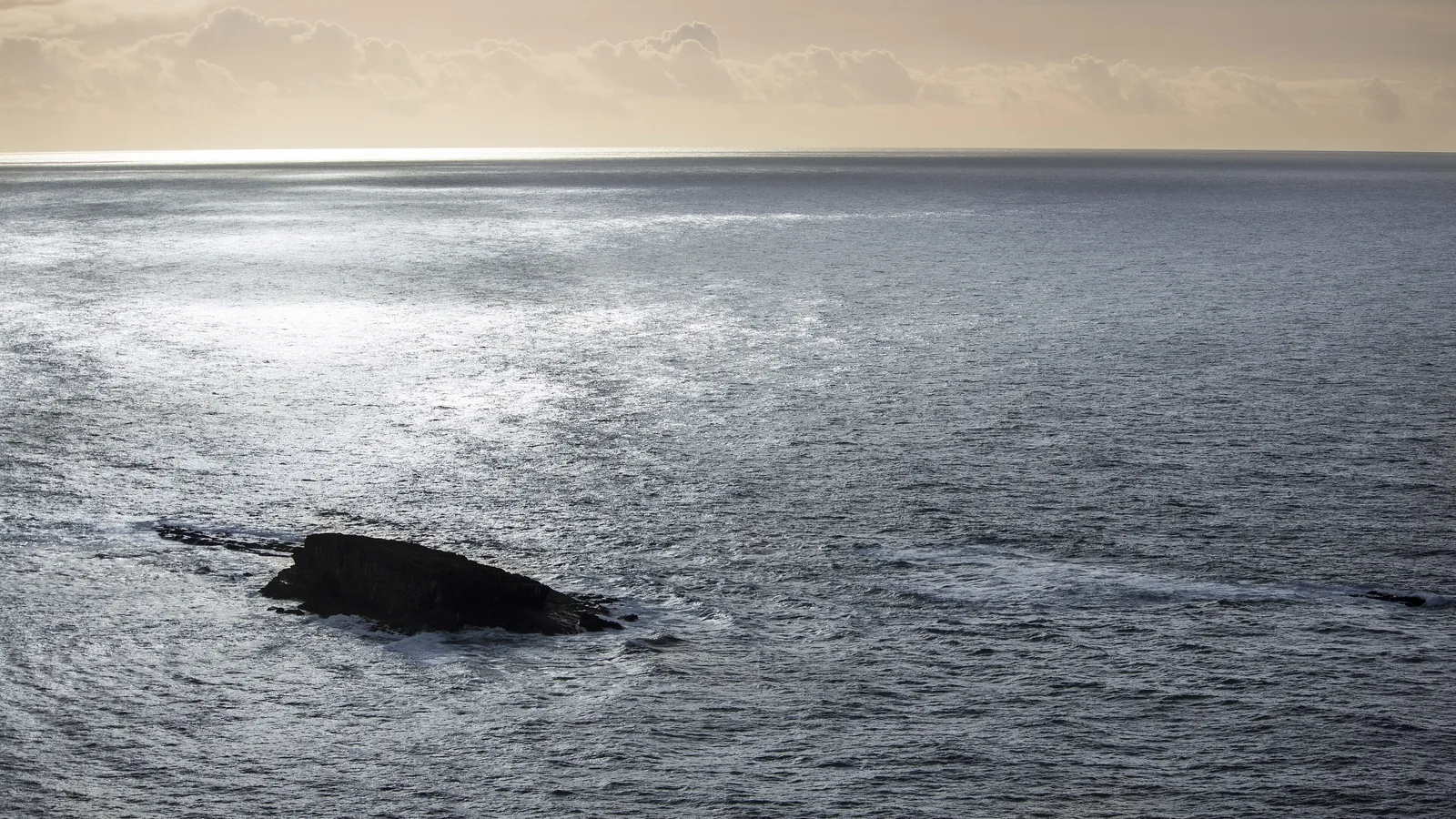
Anyone who has stood on the cape in winter understands the name. It sits about 500 feet above the ocean and catches the full force of storms coming off the Pacific. On a clear day it is one of the best viewpoints on the central coast, with rocky cliffs to the north and a long curve of beach running south toward Yaquina Head.
The Look-Out
In 1928 Wilbur and Florence Badley gave land on Cape Foulweather to the state on the condition that the viewpoint be kept open to the public, according to Oregon State Parks. Next to it, the Badleys built a small coffee shop in 1937 on a basalt ledge about 450 feet above the sea. They soon found visitors wanted souvenirs more than coffee, and the Look-Out on Cape Foulweather became a busy gift shop, timed to the completion of the Coast Highway in 1932 and its big bridges in 1936.
During World War II, the building served as a lookout for the Coast Guard’s beach patrol. The National Park Service’s National Register listing notes that six Coast Guard members lived there between 1942 and 1944, watching the coast for enemy ships. The Badleys ran the shop until 1963. It went through several owners before Oregon Parks and Recreation bought it in 2013, and it was listed on the National Register in 2014.
Visiting
The cape is part of Otter Crest State Scenic Viewpoint, reached by the Otter Crest Loop off Highway 101 south of Depoe Bay. The gift shop is open 10 a.m. to 3 p.m. Wednesday through Sunday and closed in January and February, according to the state. Inside, park staff and volunteers sell souvenirs and have opened part of the building for viewing and interpretation. It is a reliable place to look for gray whales, and you can see down to the Devil’s Punchbowl at Otter Rock. Bring a jacket even in summer, and do not be surprised if the cape lives up to its name.
Marnie Holcomb is the editor and publisher of Oregon Coast Daily News and covers Lincoln County government and community life.