Photo: Tamanoeconomico / Wikimedia Commons, CC BY-SA 4.0
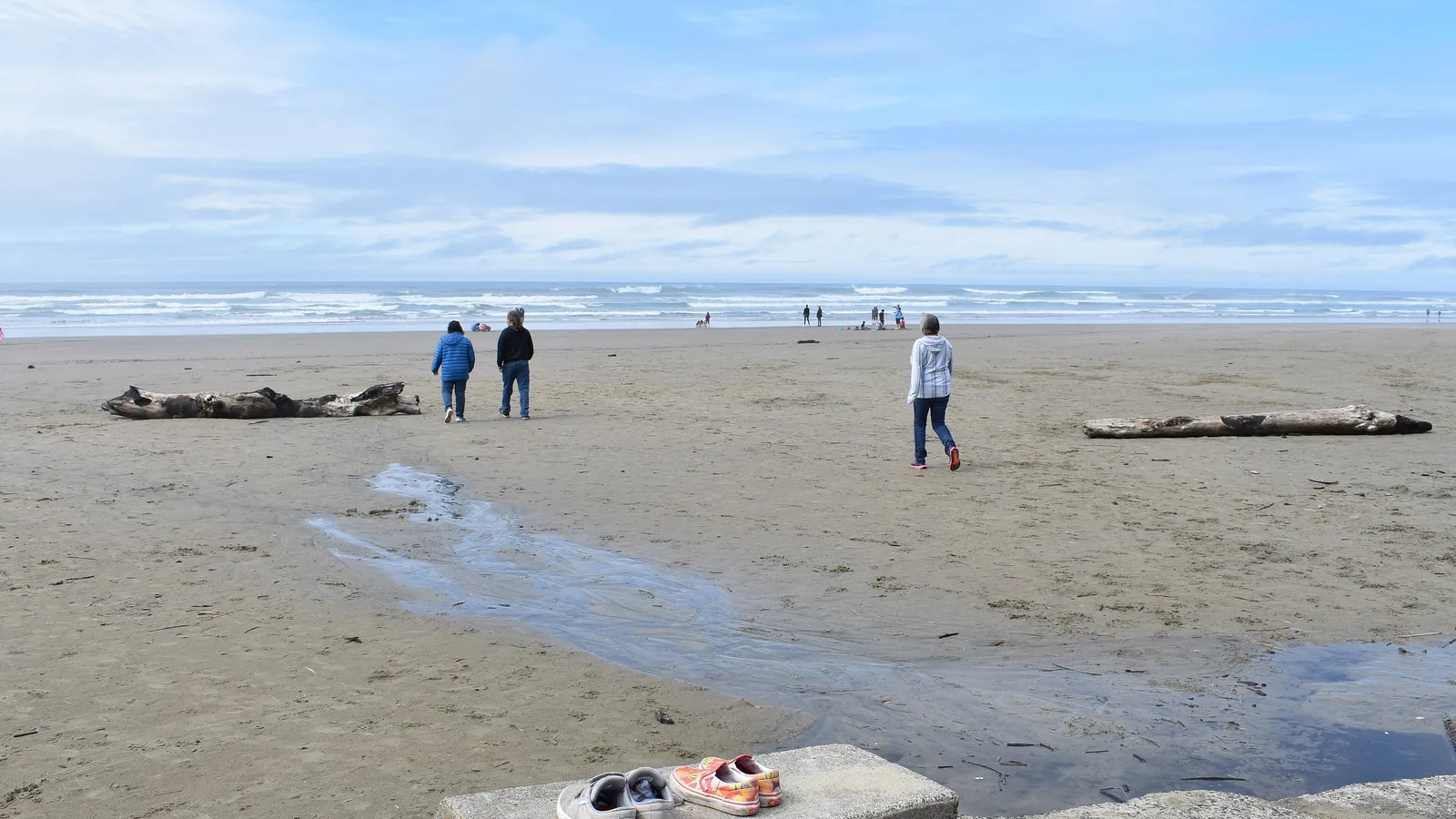
Nye Beach is the part of Newport that faces the ocean rather than the bay. Its few blocks of shops, galleries, restaurants and inns sit just west of U.S. 101, with the beach at the end of the street. The neighborhood feels like a village, and that comes from its history as a resort district.
A resort before there was a highway
The area takes its name from John Nye, who claimed the land in the 1860s. By the late 1800s, people from the Willamette Valley were coming for rest and sea air. They rode the train to Yaquina City, took a ferry down the bay to Newport’s bayfront, and then walked over to the ocean side on a wooden boardwalk built in 1891, according to the Nye Beach merchants’ history of the district. Cottages and a second commercial area grew up around the beach to serve them.
Some early residents became well known. Thomas Condon, Oregon’s first state geologist and later a University of Oregon professor, kept a cottage on what is now NW Third Street and led walks explaining the beach’s geology. Dr. Henry Minthorn, an uncle of President Herbert Hoover, built one of the first businesses there, a set of hot sea baths. Visitors believed the heated saltwater could draw toxins from their bodies. His home still stands on NW Cliff Street.
In 1905, Sam Irvin built a log recreation hall with a dance floor, a bowling alley and horseshoe pits, along with a hotel that served as Newport’s first hospital during World War I.
The 1912 boom
The district grew quickly between 1910 and 1912. The Nicolai Hotel and the New Cliff House, now the Sylvia Beach Hotel, went up in those years, along with the Natatorium. The Natatorium was the district’s main attraction, with a heated seawater swimming pool, a dance hall and a theater. In 1913 a bathhouse with men’s and women’s changing rooms and a big rock fireplace was built near the beach. That building now houses the Yaquina Art Association gallery.
The Sylvia Beach Hotel, a literary-themed inn with rooms named for authors, is one of the clearest connections to that era. We covered its story in our piece on the hotel’s namesake.
Decline and renewal
After highways replaced trains and ferries, travelers could drive straight through, and the resort district lost some of its pull. In 1967 the aging Natatorium was bought with urban renewal money and torn down. The site became the oceanfront parking area and turnaround at the foot of NW Beach Drive, which is still the main beach access today.
The arts helped bring the district back. Minthorn’s old sanitarium site became the location of the Newport Visual Arts Center, which the city opened in 1983 above the turnaround. Galleries, bookshops and cafes filled the old storefronts. Later urban renewal spending paid for new paving stones on NW Beach Drive and NW Cliff Street, public restrooms, historic-style street lights and a foot wash at the beach.
Nye Beach today
The neighborhood is now one of Newport’s main draws for visitors who want to walk rather than drive. Most of the businesses are small and locally owned, including galleries, a few clothing and gift shops, coffee shops, and restaurants ranging from chowder to fine dining, along with inns and vacation rentals in the old cottages. The Visual Arts Center and Yaquina Art Association hold rotating exhibits, and the Newport Performing Arts Center is a short walk east.
Parking near the turnaround fills up on summer weekends. The street grid is small enough to cover on foot from there or from side streets. The beach is wide and sandy, with Yaquina Head Lighthouse visible to the north on a clear day.
The setting is the same one that drew visitors in the 1890s: a short walk from the bay to open ocean. The bathhouses and the Natatorium are gone, but many of the people who come to Nye Beach still come for a slow day by the sea.
Marnie Holcomb is the editor and publisher of Oregon Coast Daily News and covers Lincoln County government and community life.