Photo: Rickymouser45 / Wikimedia Commons, CC BY-SA 4.0
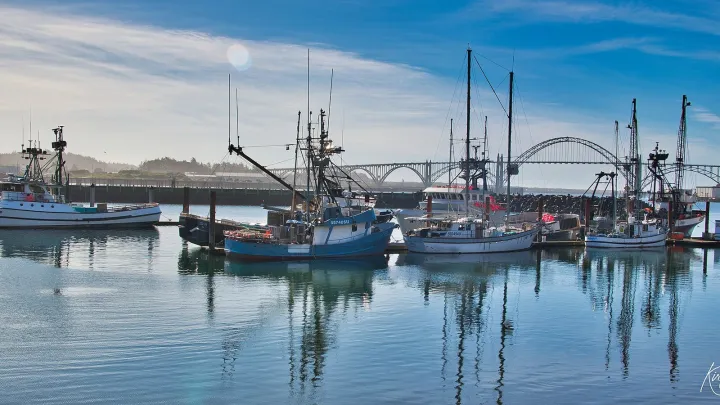
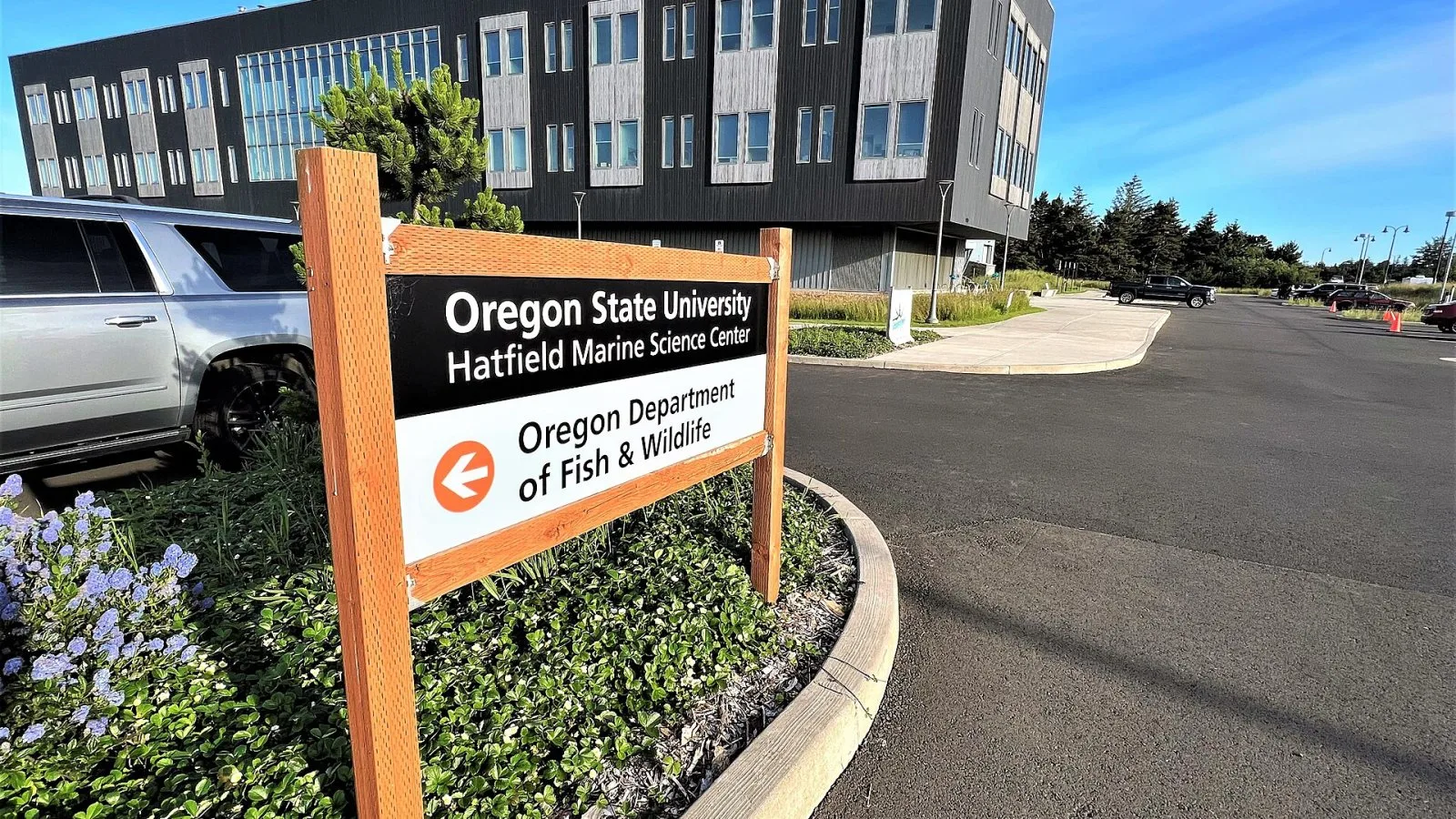
Oregon State University’s Hatfield Marine Science Center sits on the south shore of Yaquina Bay in Newport’s South Beach neighborhood, on low ground within the area expected to flood in a major Cascadia tsunami. When OSU planned a large expansion in the mid-2010s, where to put the new building became one of the biggest local debates of the decade. Our history of the center and its namesake covers how Hatfield got started. This story is about its newest building.
The Marine Studies Initiative
OSU launched the Marine Studies Initiative to expand teaching and research on marine issues, from rising sea levels and ocean acidification to sustainable fisheries and coastal economies. Its goal was to teach 500 students a year in Newport by 2025, according to the university. The centerpiece was a new building for classrooms, labs and offices. The Legislature approved $24.8 million in state bonds in 2015, and the OSU Foundation set out to raise $25 million in private money to match, plus more for related programs.
Building in the inundation zone
The obvious question was whether to build on the Hatfield campus, in the tsunami zone, or on higher ground elsewhere in Newport. Some scientists, including OSU faculty, argued publicly that putting a major new building and hundreds of students in the inundation zone was a mistake. Supporters said moving it would separate students from the seawater labs, research ships and agency partners that make Hatfield valuable.
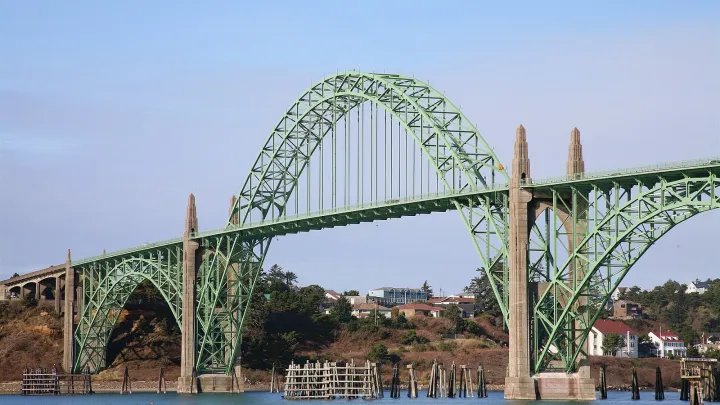
OSU President Edward Ray had a committee evaluate the Hatfield site against two upland sites, with internal and independent outside reviews. On Aug. 4, 2016, he announced that the building would go at Hatfield, next to the Guin Library just east of the U.S. 101 bridge.
“Throughout the evaluation process, which included two upland sites, the safety of those who work, study and visit this building and HMSC during a potential catastrophic seismic event has been my overriding concern,” Ray said in the university’s announcement. He said the building could be designed to withstand a magnitude 9.0 earthquake and tsunami and would provide a rooftop refuge for people who are injured, disabled or otherwise unable to reach the main evacuation site on nearby Safe Haven Hill. It might also shelter people from nearby businesses and attractions. OSU said it would build student housing on higher ground in Newport.
The building
The Gladys Valley Marine Studies Building opened in 2020. It covers about 72,000 square feet and cost about $61.7 million, according to OSU. It is designed to survive a major Cascadia earthquake and the tsunami that follows.
The roof, about 47 feet above the ground, serves as a vertical evacuation platform. OSU says it can hold about 920 people for up to two days. It is meant for people who cannot reach Safe Haven Hill in the minutes after a quake. It is one of the most visible tsunami safety structures on the Oregon coast.
Why it matters locally
For Newport, the building brings more students, faculty and research money to South Beach, adding to the aquarium and NOAA nearby. It also gives the area’s low-lying South Beach neighborhood a refuge that did not exist before.
The debate also changed how coastal communities talk about building in tsunami zones. The state and coastal cities have since paid more attention to evacuation routes and vertical refuges for areas where high ground is too far to reach on foot. If you work or visit at Hatfield, learn the routes to Safe Haven Hill and the rooftop refuge, and know that after a strong, long earthquake on the coast, you should move to high ground immediately without waiting for an official warning.