Photo: Visitor7 / Wikimedia Commons, CC BY-SA 3.0
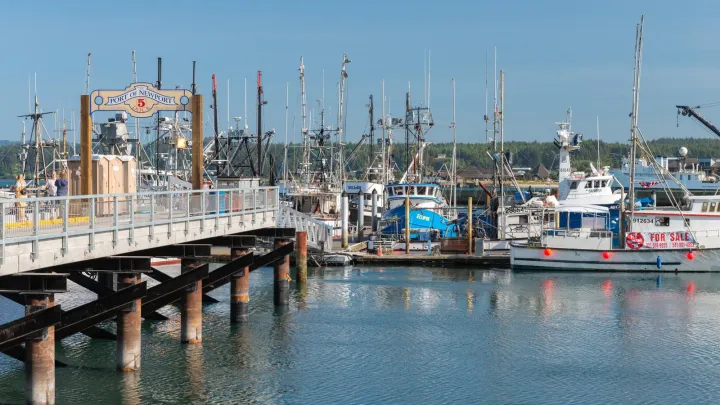
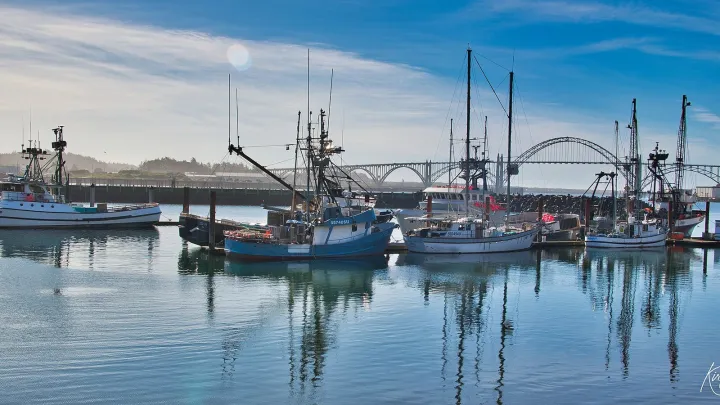
Yaquina Bay fills with sand and silt every year. River sediment comes down from the Yaquina watershed and ocean sand moves in on the tides, and without regular dredging the channels, berths and marina basins would slowly get too shallow for the boats that use them. For the Port of Newport, which runs the commercial fishing docks, the South Beach marina and the International Terminal, that makes dredging a recurring cost rather than a one-time project.
Two kinds of dredging
The federal navigation channel through the bar and up the bay is maintained by the U.S. Army Corps of Engineers, which schedules its own dredges and disposal sites offshore. The port is responsible for the areas it owns or leases, such as the marina basins and the berths at its docks. That split means the port has to plan, permit and pay for its own work, often with help from state or federal grants.
The Corps’ current maintenance plan for Yaquina Bay and River includes the South Beach Marina access channel, the route boats use to reach the marina. In an April 2026 filing with Oregon’s coastal management program, the Corps said dredging there would take place between July 1 and Oct. 31, removing up to 25,000 cubic yards each time. That July-to-October window is set to protect fish.
South Beach Marina
The marina itself is the port’s job. According to a port commission packet from June 2026, the marina has not been dredged in nearly 30 years. Sediment has built up in the basin, limiting where boats can tie up at low tide.
The port’s 2026 capital improvement plan lists marina dredging for the 2026-27 fiscal year. The project would remove up to 20,000 cubic yards to restore the basin to a depth of 10 feet below mean lower low water. The port has its permits, the plan says, but the work is waiting on funding. The port applied for help through Connect Oregon, ODOT’s grant program for ports and other transportation projects.
Why permits take time
Dredging in an estuary requires permits from the Corps under federal clean water rules and from the Oregon Department of State Lands, which manages removal and fill in state waters. The sediment has to be tested before it can be placed in the water or on land, and the work has to avoid in-water periods that protect salmon and other fish. Agencies such as the Oregon Department of Fish and Wildlife and the Department of Environmental Quality review those plans. Ports commonly apply for multi-year permits so that a single approval can cover several seasons of maintenance.
Finding a place to put the material is often the hardest part. Clean sand can go to approved sites offshore or in the bay, but material with contaminants has to go to land, which costs more.
What is at stake
Shoaling at the commercial docks affects the boats that land Dungeness crab, pink shrimp, groundfish, whiting and albacore in Newport, one of the busiest commercial fishing ports on the West Coast. In the marina, it limits where recreational boats can tie up and where charter boats can operate. At the terminal, depth decides what vessels can berth. For more on the fleet, see our story on the Bayfront, and for summer’s albacore season, our guide to buying tuna off the boat.
The South Beach Marina also serves visitors to the Oregon Coast Aquarium and Hatfield Marine Science Center area, and its RV park and fishing pier draw crowds in summer.
Following the project
Port commission meetings are public, and dredging budgets and permit timelines appear in the commission’s agendas and minutes. The port’s budget committee meets each spring. Those documents are the most reliable way to follow a project from application to the arrival of a dredge. For how ports fit into local government, see our guide, and for the upriver port, our story on the Port of Toledo boatyard.