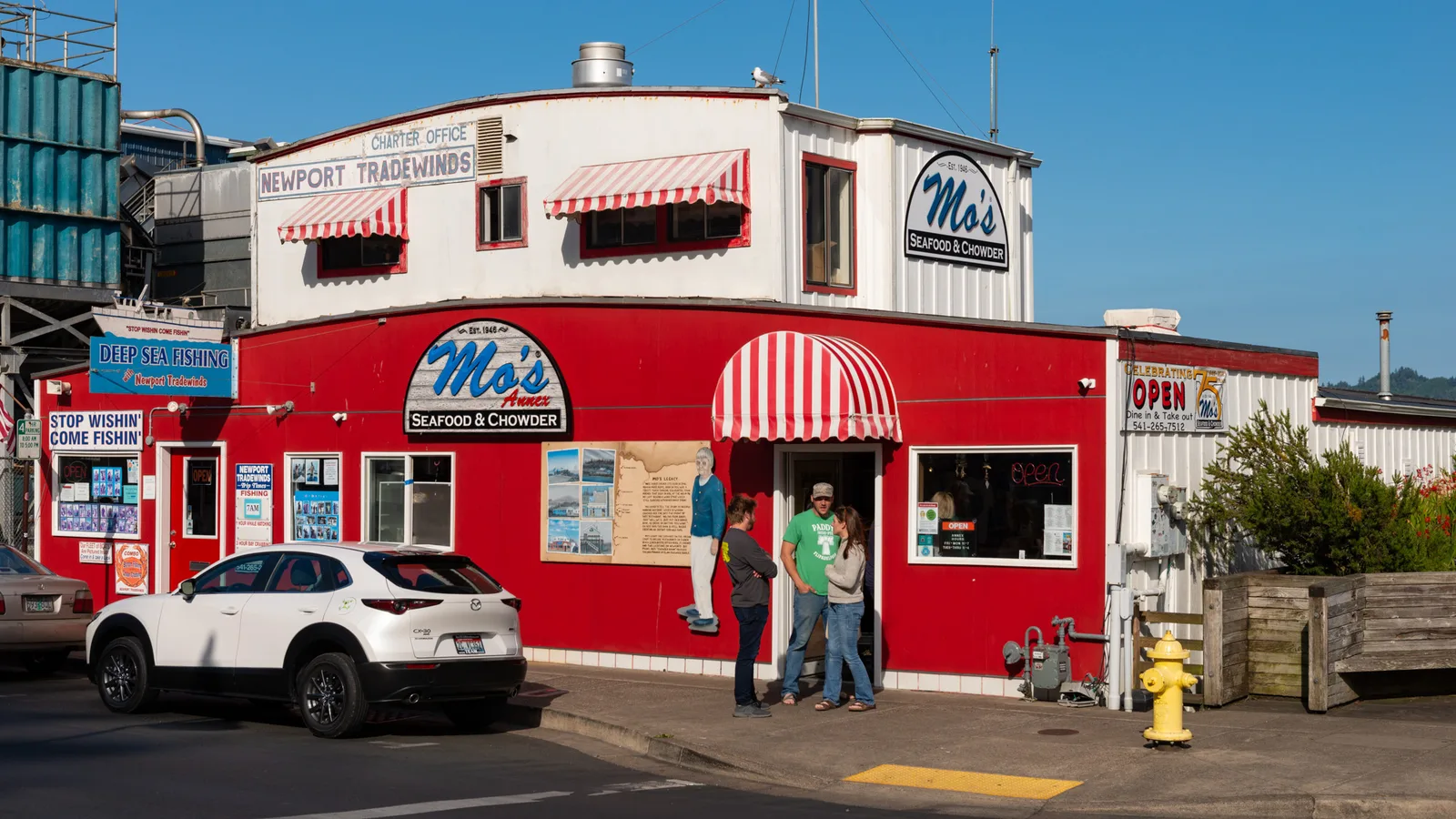
Photo: Gary Halvorson, Oregon State Archives / Wikimedia Commons, CC BY 4.0
Bay Boulevard in Newport is one of the few places on the West Coast where a working fishing harbor and a busy tourist strip share the same street. Seafood processing plants and fishing docks sit next to chowder houses, galleries and souvenir shops. On a summer afternoon, delivery trucks back into the plants while visitors walk the sidewalks and stop to watch the sea lions.
The fishing side
Newport is one of Oregon’s most important fishing ports. In 2024, according to Port of Newport and Oregon Sea Grant figures drawing on state landing data, about 50 million pounds of seafood worth roughly $59 million at the dock were landed in Newport. That was about 18% of Oregon’s commercial landings by weight and about a third by value, making Newport the state’s second-largest port by volume.
The port lists about 149 commercial vessels that call Newport home, and more than 300 deliver there in a typical year. The main catches are Dungeness crab, pink shrimp, Pacific whiting, rockfish, sole, salmon and albacore tuna. Crab season usually starts in December, shrimp in spring and whiting in summer, so there is work at the docks for most of the year.
The processing plants on the Bayfront buy, cook, freeze and pack much of that catch for shipment across the country and overseas. They employ seasonal and year-round workers. Around them are businesses that serve the fleet, including ice houses, fuel docks, net and gear suppliers, marine electronics and welding shops.
The tourist side
Across the street and between the plants are restaurants, candy and gift shops, galleries, charter offices and attractions. Mo’s, the chowder house started by Mo Niemi in 1946, is one of the best-known. Charter boats leave from the Bayfront for bottom fishing, crabbing and whale watching, and visitors buy fresh fish directly from some boats in season. Our guide to buying albacore off the boat covers that.
The sea lion draw
California sea lions haul out on docks off the Bayfront, mostly in fall and winter, and their barking can be heard up and down the street. They are one of the town’s biggest free attractions. Sea lions are protected under the federal Marine Mammal Protection Act, and they also compete with fishermen for fish and damage docks. The port has provided separate haul-out space in the past to keep them off working floats.
Two economies, one street
Most of the time, the arrangement works. Fishermen get a nearby market and services, and visitors get to see a real working harbor instead of a staged one. Restaurants can buy seafood landed a few hundred feet away.
It also creates friction. Parking, truck traffic and pedestrian safety come up regularly at city meetings. Waterfront land is limited, and fishing businesses worry about being squeezed out as property values rise and tourist businesses expand. The city and the Port of Newport have worked to keep the Bayfront zoned for water-dependent uses alongside tourism.
The fishing economy also crosses the bay. The NOAA fleet at South Beach and the boatyard upriver in Toledo are part of the same system. See our stories on NOAA’s Marine Operations Center and the Port of Toledo boatyard.
If you visit, go early in the day to see boats unloading, and watch for forklifts and trucks around the plants. Stay well back from the sea lions, which can bite.
Dewey Albrecht covers the Port of Newport, commercial and sport fishing and the Yaquina Bay bar.