Photo: Julie Gentry / Wikimedia Commons, CC0
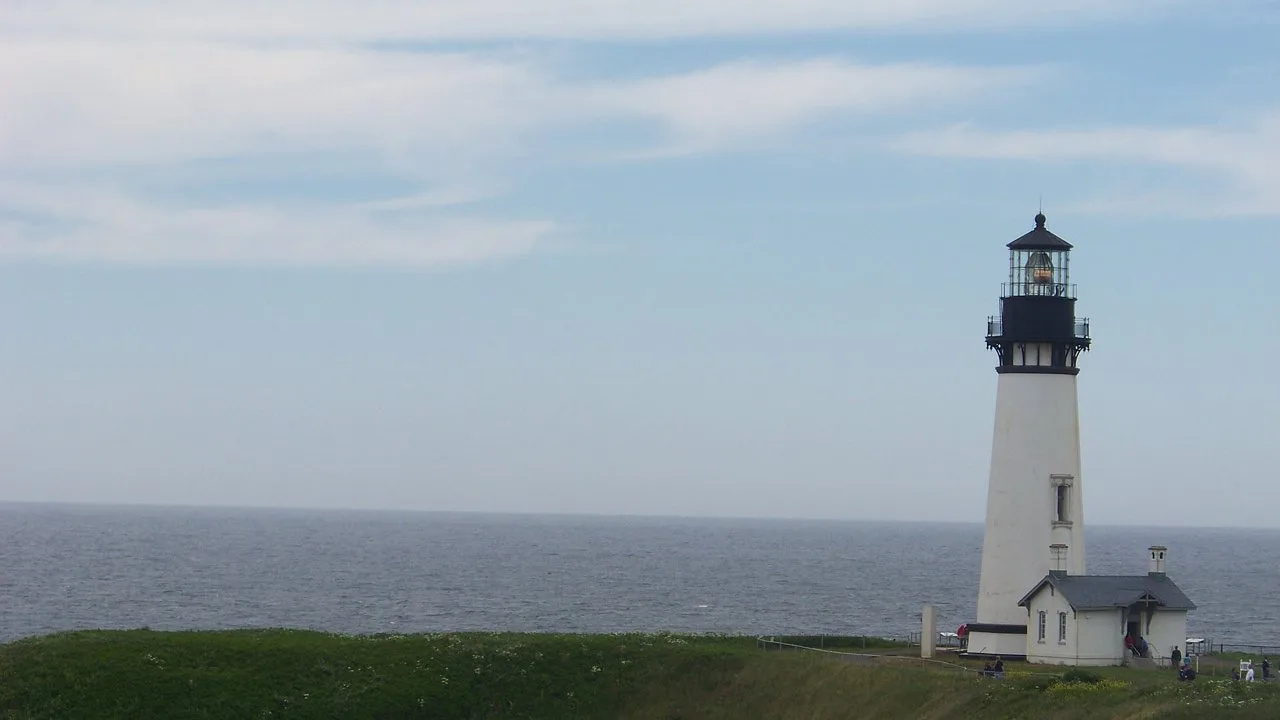
Yaquina Head is a narrow basalt headland that runs about a mile into the Pacific just north of Newport. The federal Bureau of Land Management manages it as the Yaquina Head Outstanding Natural Area, a designation Congress created for it in 1980. It packs a lighthouse, tide pools and one of the coast’s best seabird views into a short drive off U.S. 101.
The headland is made of lava that flowed from eastern Oregon about 14 million years ago and reached the sea. The hard basalt resisted erosion as the softer rock around it washed away, leaving a point that juts into the ocean and a string of offshore rocks.
The lighthouse
The Yaquina Head Lighthouse was first lit in 1873. At 93 feet, it is the tallest lighthouse tower in Oregon, and it still works as an active aid to navigation. According to the BLM, it still uses its original first-order Fresnel lens, made in France in 1868. Lightkeepers and their families lived on the headland for decades before the light was automated, as we describe in our story on the Yaquina Head keepers.
Tours of the tower are offered when staffing allows. Check with the BLM for the current schedule, since tours can fill up in summer. For the story of the older lighthouse at the mouth of Yaquina Bay, which operated only briefly before Yaquina Head took over, see our Yaquina Bay Lighthouse history.
Tide pools
Two intertidal areas are reachable on foot. Cobble Beach, down a steep set of stairs from the lighthouse road, is covered with smooth, dark basalt cobbles that clatter in the surf. Quarry Cove, a former rock quarry, was reshaped into tide pools after the area was protected, and a trail connects it to the Interpretive Center. At low tide, look for sea stars, anemones, chitons and urchins.
Tide pool rules are simple. Stay off the seaweed-covered rocks when waves are running, step on bare rock or sand, and leave animals where you find them. Collecting is not allowed. Rangers and volunteers are often on the beach at low tide to answer questions.
Seabirds and whales
Colony Rock and the other offshore rocks host common murres in the nesting season, along with cormorants, gulls and pigeon guillemots. Thousands of murres can crowd onto the rocks in spring and summer. Harbor seals haul out below the headland, and you can often see them from the overlooks. Gray whales are often seen from the point in winter and spring, and some stay to feed through summer.
The Interpretive Center
The BLM’s Interpretive Center opened in 1997 near the entrance. It has exhibits on the headland’s geology, marine life, seabirds and the lives of the lightkeepers, plus a short film and a store. Rangers lead talks and programs in the busier months.
Before you go
There is an entry fee per vehicle, which the BLM has set at $7 for a three-day pass, and people who walk or bike in pay nothing. Federal recreation passes such as America the Beautiful are accepted. Hours vary by season, so check the BLM’s site before you go.
Plan around a low tide, ideally a minus tide, for the best tide pools. Our homepage tide box uses NOAA predictions for South Beach, a short drive south. Wear shoes with good grip, and bring layers, since the headland is often windy and cooler than town. For whale-watching tips, see how researchers study whales off Newport, and for a trip out on the water, our guide to Depoe Bay whale watching charters.