Photo: Joe Mabel / Wikimedia Commons, CC BY-SA 4.0
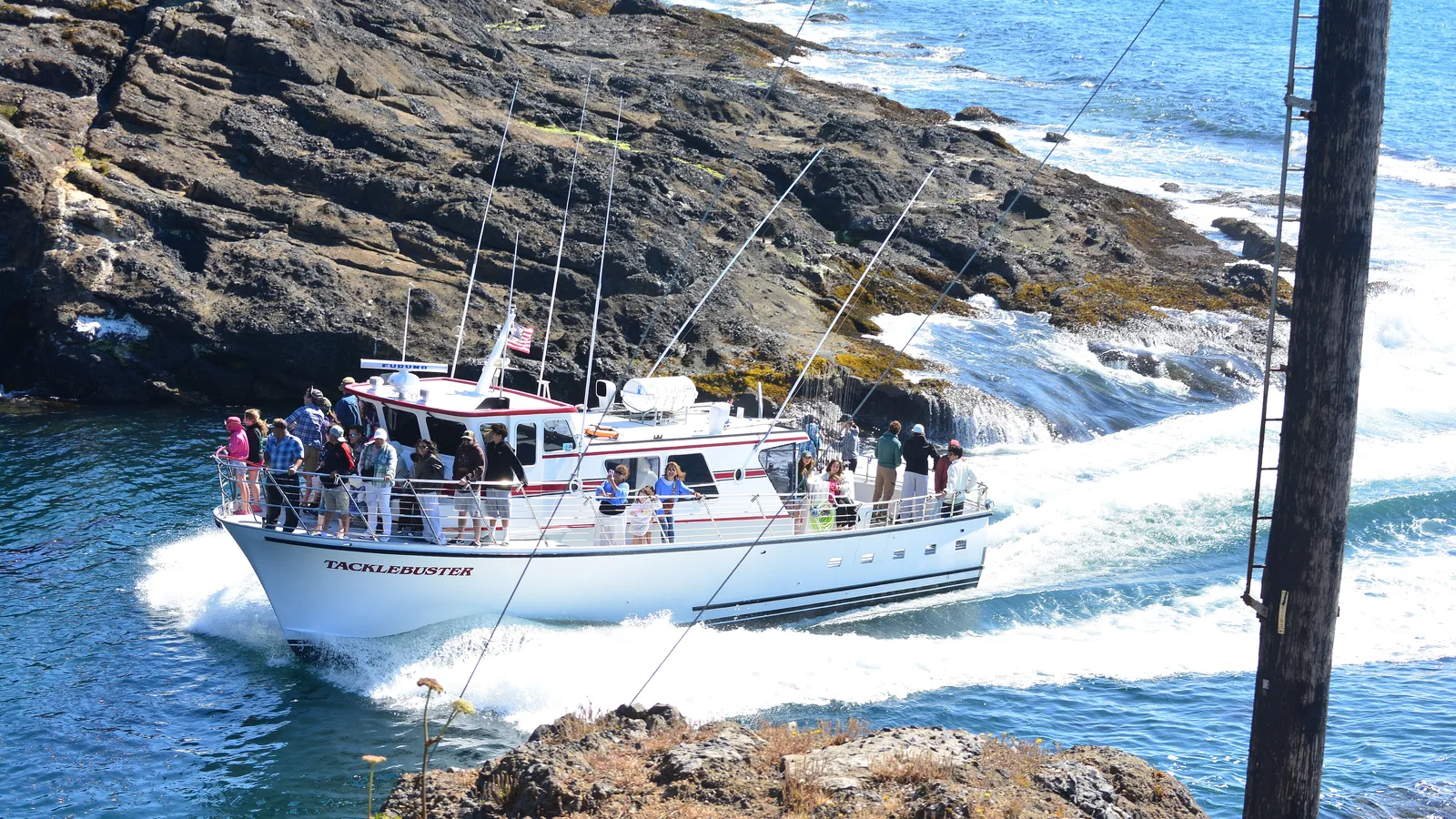
Depoe Bay’s harbor is so small that watching boats go in and out is one of the town’s main attractions. The city calls it the world’s smallest natural navigable harbor. It covers about six acres and connects to the Pacific through a rock channel about 50 feet wide that bends under the U.S. 101 bridge. Boats have to time the swells to run it, and visitors line the seawall to watch.
How the harbor was made
The inner bay was once shallow, with a small beach on its east side and cedar forest around it, according to the city’s history. Boats anchored there and sat on the bottom at low tide. Congress authorized improvements in 1937. By 1939 the harbor was dredged to 375 feet long, 125 feet wide and five feet deep.
Between 1950 and 1952, crews built a cofferdam across the channel mouth, pumped the bay dry, and enlarged it to 750 by 390 feet and eight feet deep. The seawall along the east side dates from that project. Just before the work was finished, high surf tore out part of the cofferdam and flooded the bay, though the equipment had already been removed. In 1963 the Army Corps of Engineers widened the channel from 30 to 40 feet and deepened it to eight feet at average low tide. Breakwaters were extended in 1966. The Port of Newport managed the harbor for years before turning it over to the city in 1975. A new boat ramp and docks were added in 1995.
Built around gray whales
Depoe Bay calls itself a whale-watching capital, and gray whales are the reason. Thousands migrate past Oregon each winter on the way to Mexico’s breeding lagoons and again in spring on the way back to Alaska. Oregon State Parks holds Whale Watch Weeks around those peaks, with volunteers stationed at viewpoints along the coast.
What makes Depoe Bay unusual is the summer group. Oregon State Parks says about 200 gray whales stay along the Oregon coast from about June through November to feed rather than continuing to Alaska. The rocky reefs near Depoe Bay are a favorite spot, and some of these whales return year after year. During that season, the state’s Whale Watching Center on the seawall reports seeing whales on most days, often several. The center has viewing windows, binoculars and exhibits on whale identification and is staffed by park staff and volunteers.
A trade of small operators
Several charter companies run whale-watching trips out of the harbor, usually lasting an hour or two in small boats or rigid inflatables that can get close enough to see whales feeding near the reef. Some also run fishing and crabbing charters, switching between them depending on the season. The trade supports captains, deckhands, booking staff and the restaurants and shops along the seawall.
It is a weather-dependent business. When swells run high, the channel can be too dangerous to cross, and the bar may be restricted. A stretch of rough days in summer can hurt a small operator’s season. Federal rules also require boats to keep their distance from whales and not chase them, and operators have to balance customers’ expectations with those rules.
Watching from shore
A boat ride is not required. On calm days, spouts are often visible from the seawall, especially in the morning when the water is flat. Binoculars help. Look for a puff of mist, then a long back and sometimes a tail fluke.
For more on the region’s marine science, including research on whales, see our story on the Hatfield Marine Science Center.
Marnie Holcomb is the editor and publisher of Oregon Coast Daily News and covers Lincoln County government and community life.