Photo: BLM Oregon & Washington / Wikimedia Commons, Public domain
Following a whale across an ocean used to depend on luck: a sighting from a ship, a photograph, a match years later. Researchers at Oregon State University’s Marine Mammal Institute, based at the Hatfield Marine Science Center in Newport, now use a set of tools that show where whales go and how they are doing.
Satellite tags
The institute, founded by longtime OSU whale researcher Bruce Mate, has spent decades developing satellite tags for large whales. A small tag attached to the animal sends location data to satellites when the whale surfaces. The tracks have shown migration routes and feeding areas for blue, humpback, gray and sperm whales, and newer designs have aimed to stay on longer while causing less disturbance. That information helps agencies decide where shipping lanes and fishing gear overlap with whales.
Drones over the gray whales
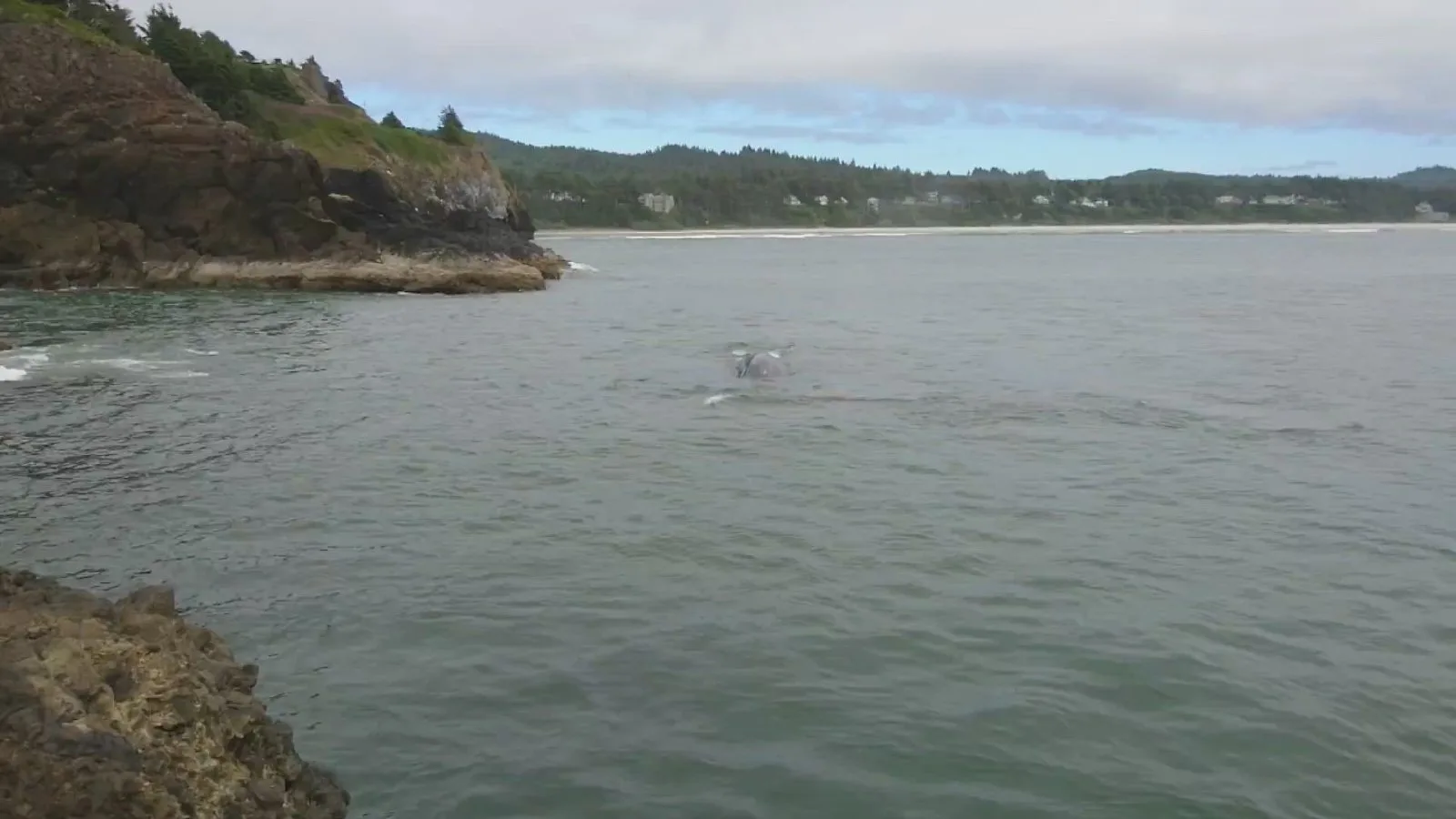
Most gray whales migrate between breeding lagoons in Mexico and feeding grounds in the Bering and Chukchi seas. A smaller group, known as the Pacific Coast Feeding Group, spends summer and fall feeding along the coast of Oregon, northern California, Washington and southern Canada, including the waters off Newport and Depoe Bay.
Researchers in the institute’s Geospatial Ecology of Marine Megafauna Lab, led by Leigh Torres, fly small drones over these whales to photograph them from above. From the images they calculate a Body Area Index, which OSU compares to the body mass index used for people. It lets scientists compare whales of different sizes and track whether individuals gain or lose condition through the season and from year to year. The team also collects floating fecal samples with nets, which reveal hormones, sex and diet without touching the animal.
What the drones found
In a study published in 2020 in the journal Ecosphere, the lab reported on drone flights over 171 whales off Oregon between June and October in 2016, 2017 and 2018. The whales’ average body condition dropped after a period of weak upwelling, the ocean process that brings cold, nutrient-rich water to the surface and feeds the zooplankton gray whales eat. The decline appeared about a year after the poor conditions began.
“The first year the whales looked really fat and healthy. But after 2016, the whales were really skinny,” lead author Leila Lemos said in OSU’s announcement. The researchers counted nine mother-calf pairs in 2016 and only one pair in each of the next two years.
Torres said the findings could help explain the unusual gray whale die-off in 2019, when more than 200 gray whales were reported dead between Mexico and Alaska, including six in Oregon. One of the dead whales had been cataloged by the OSU team in earlier years.
Cameras and noise
The lab has also attached suction-cup tags with video cameras and motion sensors to gray whales to see how they feed, work that was published in Marine Mammal Science in 2024. Another project studies how gray whales respond to noise from boats and other sources off the Oregon coast.
Photographs and patience
Photo identification remains basic to the work. Gray whales are recognized by the mottled patterns on their skin, and humpbacks by the markings under their flukes. Catalogs built over many seasons let researchers recognize the same whales returning. The OSU team has given some of the regulars names, such as Spray, Knife and Clouds.
Watching for yourself
Depoe Bay, Boiler Bay, Yaquina Head and Cape Perpetua are good places to look for spouts. Oregon State Parks runs volunteer-staffed Whale Watching Spoken Here weeks in winter and spring. Keep boats well away from whales, since federal rules set minimum approach distances. For trips on the water, see our guide to Depoe Bay charters, and for more on humpbacks, our report on crab gear and entanglement.