Photo: Rick McCharles / Wikimedia Commons, CC BY 2.0
Much of the Oregon Coast that the public can walk, picnic on and photograph today was bought, begged for or bargained over by one man during the Great Depression. Samuel H. Boardman ran Oregon’s state parks from 1929 to 1950, and in those 21 years the system grew from 46 small units covering about 4,070 acres to roughly 60,000 acres in 161 units, according to the Oregon Encyclopedia. He is often called the father of the state park system, and the coast was where he spent most of his energy.
A homesteader who loved trees
Boardman was born in Lowell, Massachusetts, on Dec. 13, 1874. He worked as a railroad engineer in Colorado before coming to Oregon, where he homesteaded in Morrow County and founded the town that still carries his name, Boardman. The farm failed on the dry land, but he kept promoting tree planting and roadside improvements, and his wife, Anna Belle, taught school and helped plat the town site.
The State Highway Department hired him in 1919. A history of the parks system published by the Oregon Parks and Recreation Department describes him in the 1920s working along Highway 30, the “Old Oregon Trail,” with what he called a “highway hoopie,” two barrels of water, a bucket and an assortment of trees, planting from The Dalles to Ontario. His fondness for trees was more than practical. “If I had a third arm, I would use it only to doff my hat to each tree I met,” he once wrote.
In August 1929, the three-member State Highway Commission put him in charge of its small roadside park program. At the time it amounted to some picnic spots, a few undeveloped parks and timber strips kept so drivers could see what the highway corridors looked like before logging.
Why he went to the coast first
Boardman saw the beaches and headlands as the most urgent land to protect. The new Oregon Coast Highway was drawing tourists, and he feared what would follow them. He pointed to the Atlantic shore, “shacked from end to end,” and complained that California’s coast had been “hot-dogged” and “beer-parloured,” according to letters quoted in the OPRD history. In 1936 he warned that “shacks and signs are beginning to show their ugliness” along the route, and argued the coast mattered as much to Ontario and Bend as to any coastal town.
The Depression helped him. Land was cheap, owners were often willing to sell low or donate, and federal work programs could supply labor. He negotiated with many rural landowners himself. In those years he assembled Ecola, Cape Lookout, Short Sand Beach, later renamed for Gov. Oswald West, and Jessie M. Honeyman, and he used Civilian Conservation Corps crews to build trails and shelters while discouraging large campgrounds and parking lots. By 1937, the coast accounted for 70 percent of all state park use, the Oregon Encyclopedia says.
Not everyone in Salem agreed. When Boardman brought Ecola to the Highway Commission in 1932, Commissioner Henry F. Spalding gave him what Boardman later called “one of the most complete verbal tongue lashings my august person has ever been decorated with,” arguing that it was wrong to spend on parks while people were near starvation. The commission accepted the park anyway.
His mark in Lincoln County
Lincoln County parks also grew on his watch. At Seal Rock, the county donated the first quarter-acre for a state wayside in 1929, and the state bought more private land in 1936 and 1942, according to Oregon State Parks. Boardman’s own letters recall his first visit to what is now Devil’s Punchbowl State Natural Area near Otter Rock, where he found “a roly-poly brown bear” chained to one of the trees. Later, when the parks debated adding campgrounds, he used memories like that to argue against anything that cheapened the setting.
The coastal highway that made these parks reachable was itself the work of other figures from these pages, including Newport’s Ben Jones and the bridge engineer Conde McCullough. Boardman’s contribution was making sure the views from that road stayed public.
The park that carries his name
One of his last projects was on the Curry County coast north of Brookings. After federal plans for a national park there stalled in 1940, Boardman pressed the state to buy land along the realigned highway, which he called the “biggest scenic, recreational project that has ever been presented to a commission from an acquisition standpoint.” By 1950 the state had acquired 1,095 acres for just under $150,000, including 367 acres donated by the Pacific Borax Co., the Oregon Encyclopedia reports.
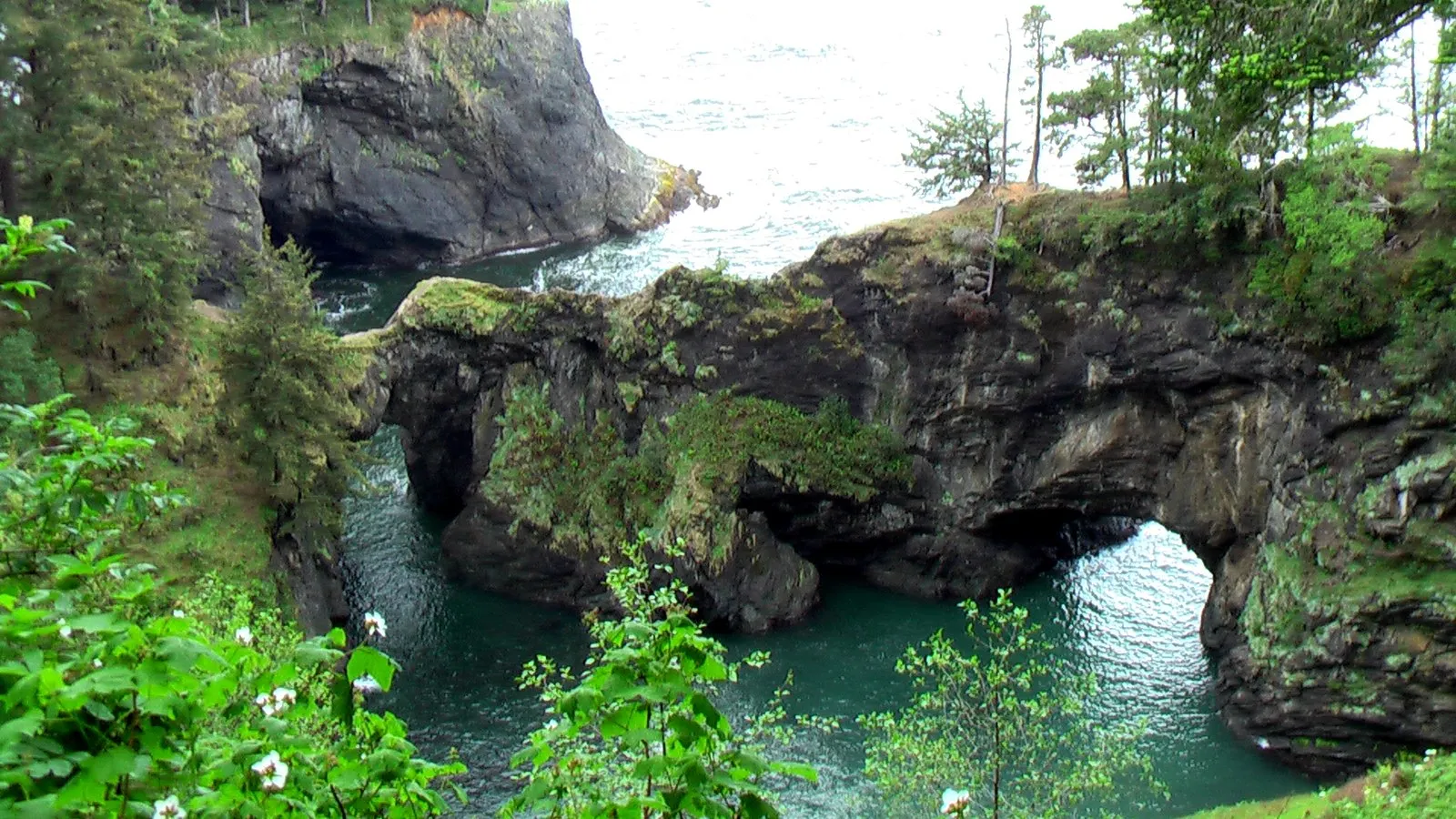
The state named that stretch for him when he retired in 1950. Today the Samuel H. Boardman State Scenic Corridor runs about 11 miles, with sea stacks, Arch Rock and the Natural Bridges, and the Oregon Coast Trail passes through it. Boardman died in Salem in 1953.
Accounts of his record differ slightly: a biography from the American Academy for Park and Recreation Administration puts the total at 181 parks and 57,195 acres at his retirement. Either way, the editor Marshall Dana’s line from 1950, quoted in the OPRD history, still sums him up: “Other states have state parks superintendents. Oregon has Sam Boardman.”
For more on the people behind the coast’s public lands, see our profile of Oswald West and the 1913 beach law and the rest of our Personalities section.
Dewey Albrecht covers the Port of Newport, commercial and sport fishing and the Yaquina Bay bar.