Photo: Bain / Wikimedia Commons, Public domain
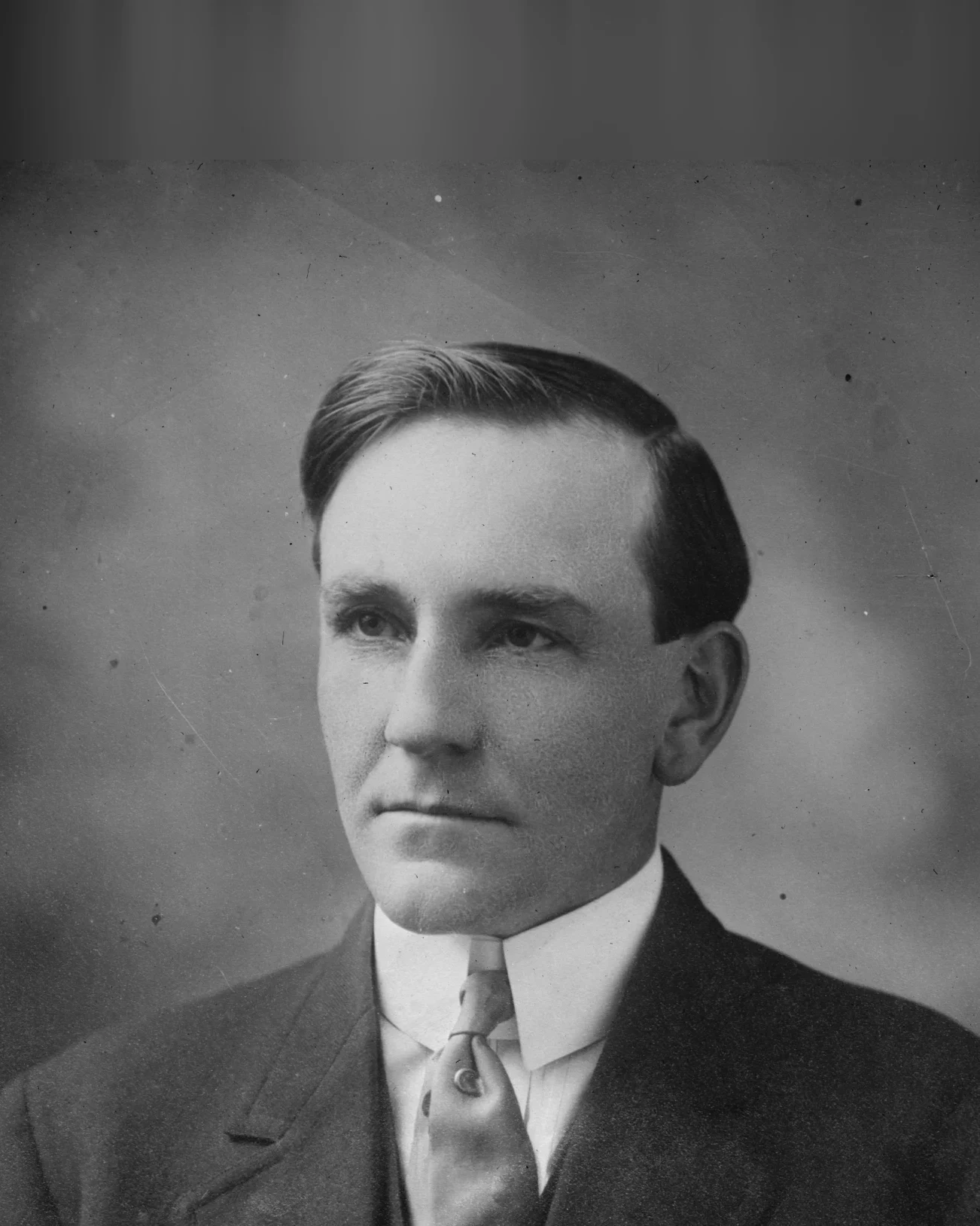
Anyone who walks the sand in Lincoln City, Newport or Waldport without asking permission is benefiting from a decision made in 1913 by a governor who was 39 years old and had grown up working in a bank. Oswald West did not invent the idea that Oregon’s beaches belong to the public, but he made it state law, and that law held the line for more than half a century.
The “boy governor”
West was born in Guelph, Ontario, in 1873 and came to Oregon with his parents at age 4, according to the Oregon Encyclopedia. He left school at 15 to work at the Ladd & Bush Bank in Salem, where co-founder Asahel Bush, a prominent Democrat, became a mentor. Gov. George Chamberlain later appointed West state land agent, a job in which he recovered thousands of acres taken by speculators during the Oregon land fraud scandals and put them to use funding schools. He then served as state railroad commissioner.
West ran for governor in 1910 as a Progressive Democrat in a heavily Republican state and won by about 6,700 votes. He took office at 38. In one term, from 1911 to 1915, he pushed for women’s suffrage, workers’ compensation, prison reform and good roads, created state commissions for fish and game, highways, industrial accidents and public utilities, and set a record for vetoes against a Republican Legislature.
A beach declared a highway
His best-known act started in his 1913 message to the Legislature. A law passed in 1899 had already declared the shore between high and low tide in Clatsop County to be a public highway. West asked lawmakers to extend that to the entire coast. The bill passed both chambers in less than a month, and he signed it on Feb. 11, 1913.
Calling the beach a highway was a practical move. At the time, sections of the coast had no road, and people did travel by wagon, horseback and later car along the hard sand at low tide. A highway was something the state clearly controlled and could not be sold to a private owner. West later said the idea came to him on horseback, riding from Elk Creek in Clatsop County south to Cannon Beach and over Neahkahnie Mountain on a postal trail to Nehalem.
What the law did, and did not, do
The 1913 statute covered only the wet sand between high and low tide. It said nothing about the dry sand above the tide line, where people actually spread blankets and build fires. Even so, the Oregon Encyclopedia notes, West created a strong public perception that the beaches were public, and that perception, backed by the highway law, held off private and commercial development of the shore for decades.
The dry-sand question came to a head in the 1960s, when a Cannon Beach motel owner fenced off part of the beach for guests. The result was the 1967 Beach Bill, which recognized public rights to use the dry sand as well. That fight is covered in our explainer on the Beach Bill. Without the 1913 law, there might not have been much public beach left to protect by then.
West put his view plainly in later writing: no selfish interest, he said, should be allowed to “destroy or even impair this great birthright of our people.”
After office
West left the governor’s office in January 1915 and practiced law in Portland. He lost a 1918 bid for the U.S. Senate, worked for more than a decade as a lobbyist for Pacific Power & Light and drifted toward the conservative wing of his party. A heart attack forced his retirement in 1945, but he wrote widely read newspaper columns into the 1950s, many of them about roads and beaches.
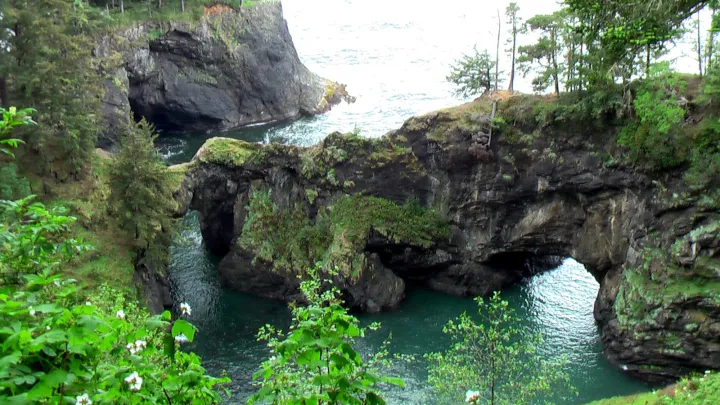
In 1958 Short Sand Beach State Park, on the north coast near Arch Cape, was renamed Oswald West State Park. He died in Portland in 1960, and his ashes were scattered at Haystack Rock in Cannon Beach.
What it means on the central coast
There is no monument to West in Lincoln County, but the evidence is everywhere: the public access points every few blocks in Lincoln City, the beach below Nye Beach’s hotels, the long walk from Seal Rock toward Waldport. Oregon’s rule that the whole ocean shore is open to the public, from the water line to the vegetation line, is still unusual among coastal states, and it began with a bill that took less than a month to pass.
Marnie Holcomb is the editor and publisher of Oregon Coast Daily News and covers Lincoln County government and community life.