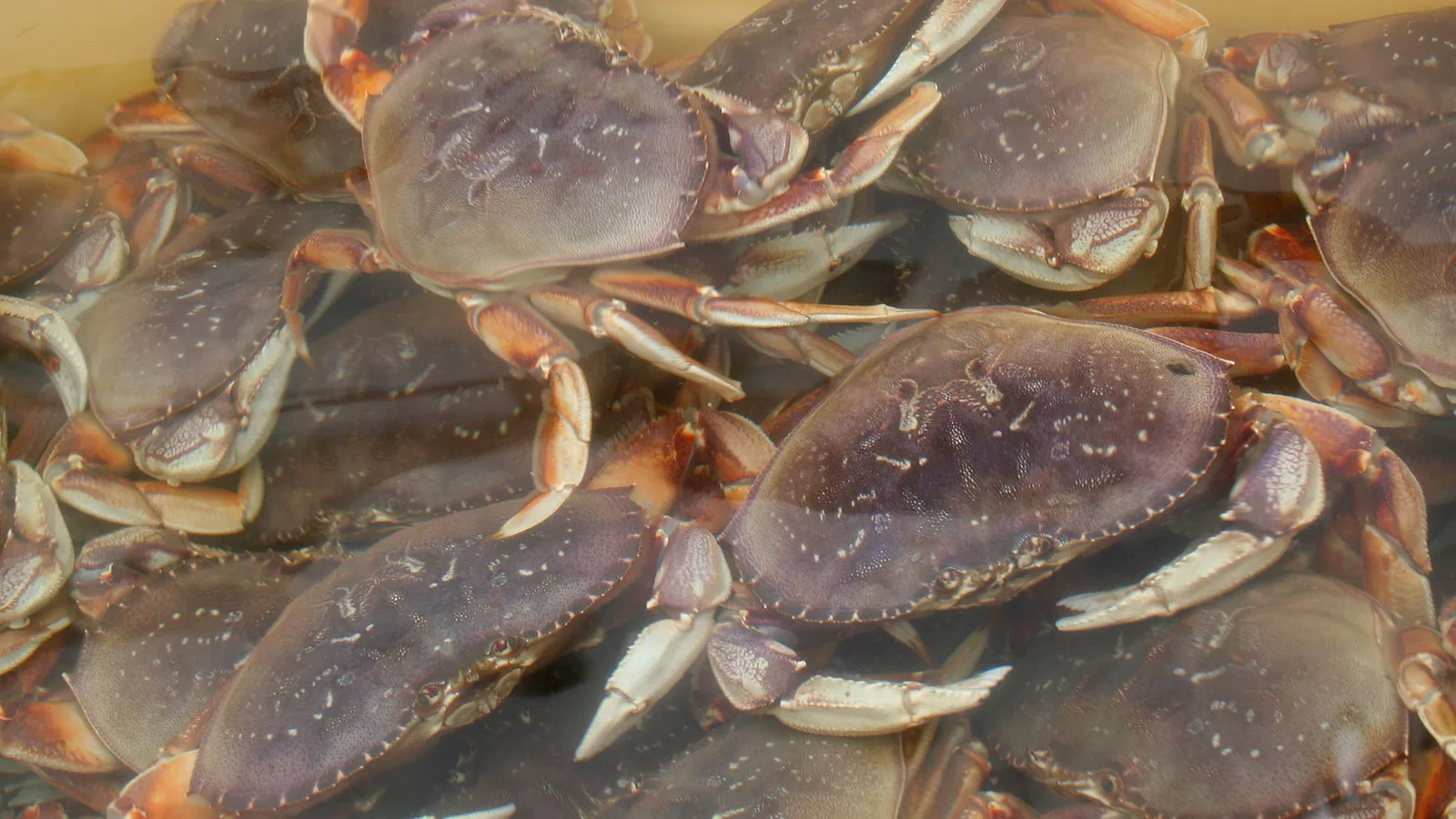
Photo: Oregon Department of Fish & Wildlife / Wikimedia Commons, Public domain
Ask anyone on the Newport Bayfront which fishery pays the bills and most will say crab. Dungeness crab is regularly Oregon’s most valuable commercial fishery, and the Newport area is at the center of it.
The numbers
The 2024-25 commercial season set a record. Fishermen landed about 15.7 million pounds statewide at an average dock price of $6.17 a pound, according to the Oregon Dungeness Crab Commission. The Lincoln Chronicle reported the season’s value at a record $97.1 million paid to fishermen. The combined Newport, Waldport and Depoe Bay port group landed about 5.4 million pounds, more than any other group on the coast.
Records have come often in recent years. ODFW newsletters reported $62.7 million for 2016-17, then $74.2 million the next season, and $91.5 million in 2021-22, which at the time beat the previous record by more than $17 million. Landings vary widely. The 2020-21 season brought in 12.2 million pounds, about 29% below the 10-year average, while 2017-18 topped 23 million.
A season built on the first weeks
Most of the catch comes in right after the season opens. In 2024-25, about 4.9 million pounds were landed in December and another 8.4 million in January, the commission’s monthly figures show. By March, landings had dropped below 600,000 pounds, and summer months brought in less than 70,000 pounds each. Crews set pots fast and fish hard in the first weeks, when crab are plentiful and prices are set.
How the season opens
The commercial ocean season is scheduled to open Dec. 1, but ODFW tests crab first. Crab that have recently molted are low in meat, and managers require them to meet a minimum meat-fill standard, 23% meat recovery in recent notices, before the season can open. The Oregon Department of Agriculture also tests for domoic acid, a natural toxin produced by algal blooms. If either test fails, the opening can be delayed, sometimes by area.
That is what happened before the 2025-26 season. The commission’s notices show the area from Cape Foulweather south to California opening Dec. 16, the stretch from Cape Falcon to Cape Foulweather on Dec. 31 and the far north coast later still, pending more meat-fill tests. Delays can push the season past the holidays, when demand and prices are often highest.
Before the opening, boats are allowed a presoak period to set gear, followed by hold inspections to make sure no one has crab aboard early. Then, on the opening date, crews begin pulling pots.
Whales and gear
Entanglement of humpback whales and other protected species in crab lines has become a major concern on the West Coast. Oregon adopted rules in 2020 that took effect May 1 each year: a 20% cut in pot limits, a 40-fathom depth limit and a late-season tag requirement, according to the commission. ODFW also wrote a conservation plan to support a federal incidental take permit and runs programs to recover lost gear after the season closes Aug. 14. A weekly landing limit applies in summer.
Where the money goes
For Newport, the crab season means work for deckhands, mechanics, gear suppliers, bait and fuel docks and processing plants. Much of the catch is sold live, cooked whole or picked for meat. Crab money also supports the restaurants, shops and marine businesses on the Bayfront through the winter, when tourism is slow. Our story on the Bayfront covers how fishing and tourism share the waterfront.
Many crabbers also fish for other species during the rest of the year, including albacore, salmon and groundfish. But for most of the Newport fleet, crab is the fishery that pays the bills. A late opening or a poor season affects the whole town.
For recreational crabbing in the bays, see our guide to crabbing on Alsea Bay.
Silas Kerrigan covers business, the tourism economy and household finance in Lincoln County.