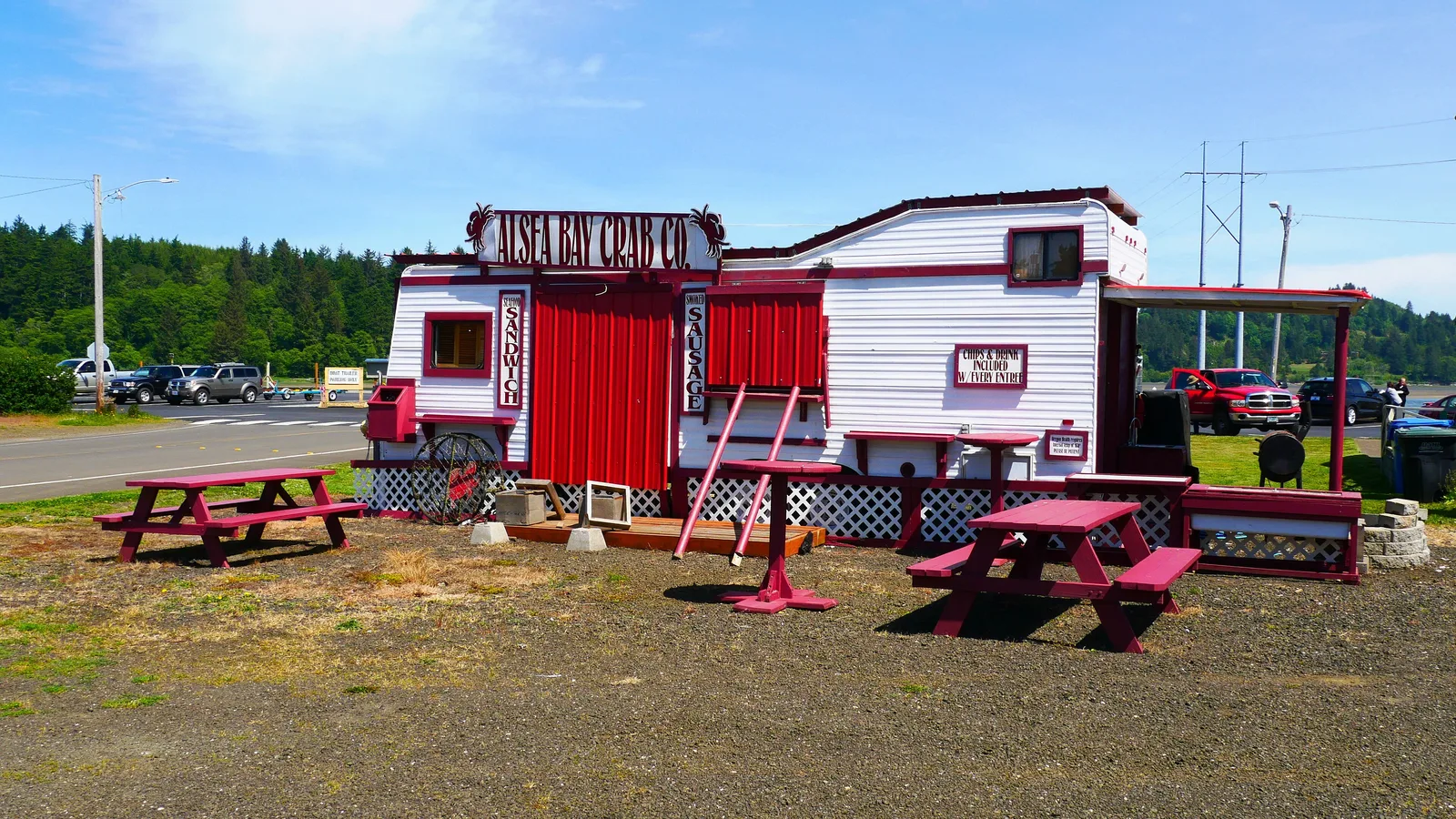
Photo: Rick Obst / Wikimedia Commons, CC BY 2.0
Alsea Bay is a shallow, sheltered estuary where the Alsea River meets the Pacific at Waldport. It is one of the easiest places on the central Oregon coast to catch Dungeness crab without owning a boat. On summer mornings, crab rings go off the public docks near the U.S. 101 bridge, and small rental boats spread out across the bay.
Where people crab
The Port of Alsea runs public docks for crabbing, fishing and moorage, along with a launch ramp, a day-use park and a picnic area on the Waldport waterfront. The port calls the bay’s crabbing “among the best in the state.” Private marinas along the river offer similar services. The port’s Dock of the Bay Marina on Mill Street rents boats that come with crab rings and bait and can give daily updates on conditions at 541-563-2003.
Dock crabbing is the cheapest way to start. A ring, some bait and a measuring gauge are all you need, and families often spend a few hours on the dock. A rental boat lets you reach deeper channels where crab tend to gather, especially as the tide changes. The bay is shallow in places, so ask the rental desk about the tides and where to avoid running aground.
The rules
Everyone 12 and older needs an Oregon shellfish license from the Oregon Department of Fish and Wildlife. The port suggests buying it online before you arrive because ODFW has changed how licenses are issued, and issuing one at the dock can slow things down.
For Dungeness crab, ODFW allows 12 per person per day. They must be male and at least 5¾ inches across the back, measured straight across in front of the points. Red rock crab have a daily limit of 24 per person, of any size or sex. Each person can use no more than three rings, lines or pots. Crabbing in bays is open year-round, 24 hours a day. Ocean crabbing has a fall closure, from Oct. 16 through Nov. 30.
Check one more thing before you go. The Oregon Department of Agriculture monitors shellfish for marine biotoxins, including domoic acid, and can close crab or clam harvesting along sections of the coast on short notice. Closures sometimes apply only to the guts, or “butter,” and sometimes to whole crab. ODA posts current closures online and runs a shellfish safety hotline. ODFW regulations and limits also change, so check both agencies before each trip.
Tips from the docks
Crabbers in Waldport tend to agree on a few basics. Fish around slack tide, when the current eases and crab move. Use fresh, oily bait such as chicken, fish carcasses or turkey legs, secured so crab cannot carry it off. Check rings every 15 to 20 minutes. Measure every Dungeness and release females and short males right away. A soft-shelled crab that has recently molted has little meat, and many crabbers let them go even if they are legal size.
Some marinas will cook your catch for a fee, which saves visitors from boiling crab in a rental kitchen.
What it means for Waldport
Waldport is smaller and quieter than Newport or Lincoln City. It lacks big attractions, so the bay is its draw. Crabbing, along with salmon fishing in the fall and clamming on the tide flats, brings visitors into town and supports the bait shops, marinas, gas stations, grocery stores and restaurants. For many families, a crabbing trip is a summer ritual, and some come back every year.
The bay’s recreational fishery also differs from Oregon’s commercial Dungeness fishery, which works in the ocean from December through summer and is one of the state’s most valuable. Bay crabbing is small by comparison, but for Waldport it is a key part of the local economy. For more on Lincoln County’s commercial fleet, see our coverage of the Port of Toledo boatyard.
Dewey Albrecht covers the Port of Newport, commercial and sport fishing and the Yaquina Bay bar.