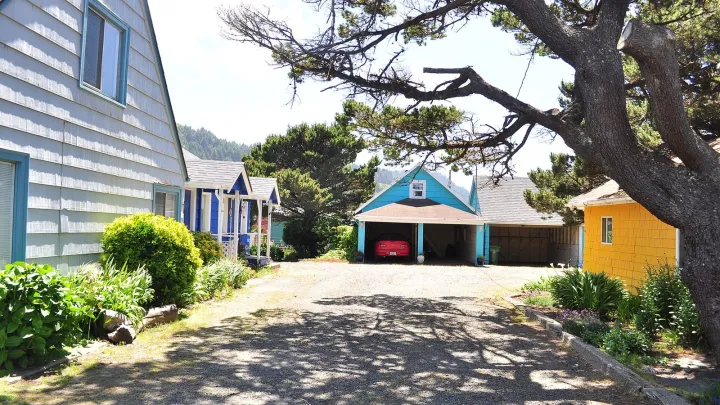
Photo: Lonelystudentwithtoomuchtime / Wikimedia Commons, CC BY-SA 4.0
Vacation rentals are a big part of the economy on the central Oregon coast. They house visitors, generate lodging taxes and provide income for owners. In unincorporated Lincoln County, they have also caused one of the longest-running local policy fights in recent memory. In August 2026 the Oregon Court of Appeals ruled largely in the county’s favor, which may bring the fight close to an end.
Who regulates what
Cities set their own rules inside city limits. Yachats, Newport, Depoe Bay and Lincoln City have limits on vacation rentals, according to the Lincoln Chronicle. Waldport, Siletz and Toledo do not. Lincoln County regulates rentals in unincorporated areas, such as the communities along U.S. 101 between towns and the neighborhoods outside city limits.
That split helps explain the problem. The county began dealing with the issue in 2016, when the number of short-term rentals in unincorporated areas grew past 600 as cities tightened their own rules.
The 2021 ballot measure
Residents frustrated with the county’s approach put a citizen measure on the November 2021 ballot. The effort began partly with neighbors in the Miroco area near Depoe Bay. Measure 21-203 would have phased out vacation rentals in residential zones over time. Commissioners amended the county ordinance just days before the vote, and voters approved the measure anyway by a wide margin.
A coalition of property owners, backed by the rental advocacy group Via Oregon, appealed both the measure and the county’s updated ordinance to Oregon’s Land Use Board of Appeals. In 2022, LUBA ruled that the measure conflicted with state land-use law. It found that the measure effectively rezoned property and required existing rentals to stop when the property changed hands, which state law does not allow for nonconforming uses. LUBA declared the measure invalid. It also ruled twice that the county’s own licensing ordinance was not a land-use decision and sent the owners’ challenge to circuit court.
The 2023 license caps
In February 2023, commissioners divided unincorporated Lincoln County into seven geographic areas, five west of U.S. 101 and two east of it, and capped the number of rental licenses in each. Licenses cannot be transferred when a property is sold, so the number is shrinking over time. The plan would reduce licenses from 502 when the areas were set to 181.
The Lincoln Chronicle reported in August 2026 that 422 licenses were active, with 138 property owners on a waiting list. In one area, from Beaver Creek south to the Alsea Bay bridge, including Bayshore north of Waldport, licenses were expected to fall from 139 to 26.
The court fight
Twenty rental owners sued in circuit court. In December 2023, pro tem Judge Joseph Allison upheld most of the ordinance but struck three provisions as unconstitutionally vague. Those covered a ban on events such as weddings that exceed capacity limits, the complaint process and the county counsel’s authority to appoint a hearings officer.
In August 2026 a three-judge Court of Appeals panel, in Briggs v. Lincoln County, agreed that the ordinance was not a land-use decision and rejected the owners’ argument that it amounted to rezoning. It reversed Allison’s vagueness ruling on the three provisions and sent those issues back to circuit court. The county called it “a significant legal victory.” Commissioner Casey Miller said the decision gives the county more certainty in running the licensing program.
Both sides
Rental owners and managers argue that visitors who stay in rentals spend money in restaurants and shops across the county and that many owners depend on the income. Neighbors complain about noise, parking and homes that sit empty most of the year. Housing advocates note that every house used as a rental is one less for workers. Lincoln County’s 2022 workforce housing plan found that a large share of the county’s housing is seasonal or second homes, an issue we cover in our story on the housing squeeze.
The owners’ attorney had not commented when the ruling was reported. A further appeal to the Oregon Supreme Court is possible. For now, the county’s cap stands and licenses will continue to decline as properties are sold.
Marnie Holcomb is the editor and publisher of Oregon Coast Daily News and covers Lincoln County government and community life.