Photo: Visitor7 / Wikimedia Commons, CC BY-SA 3.0
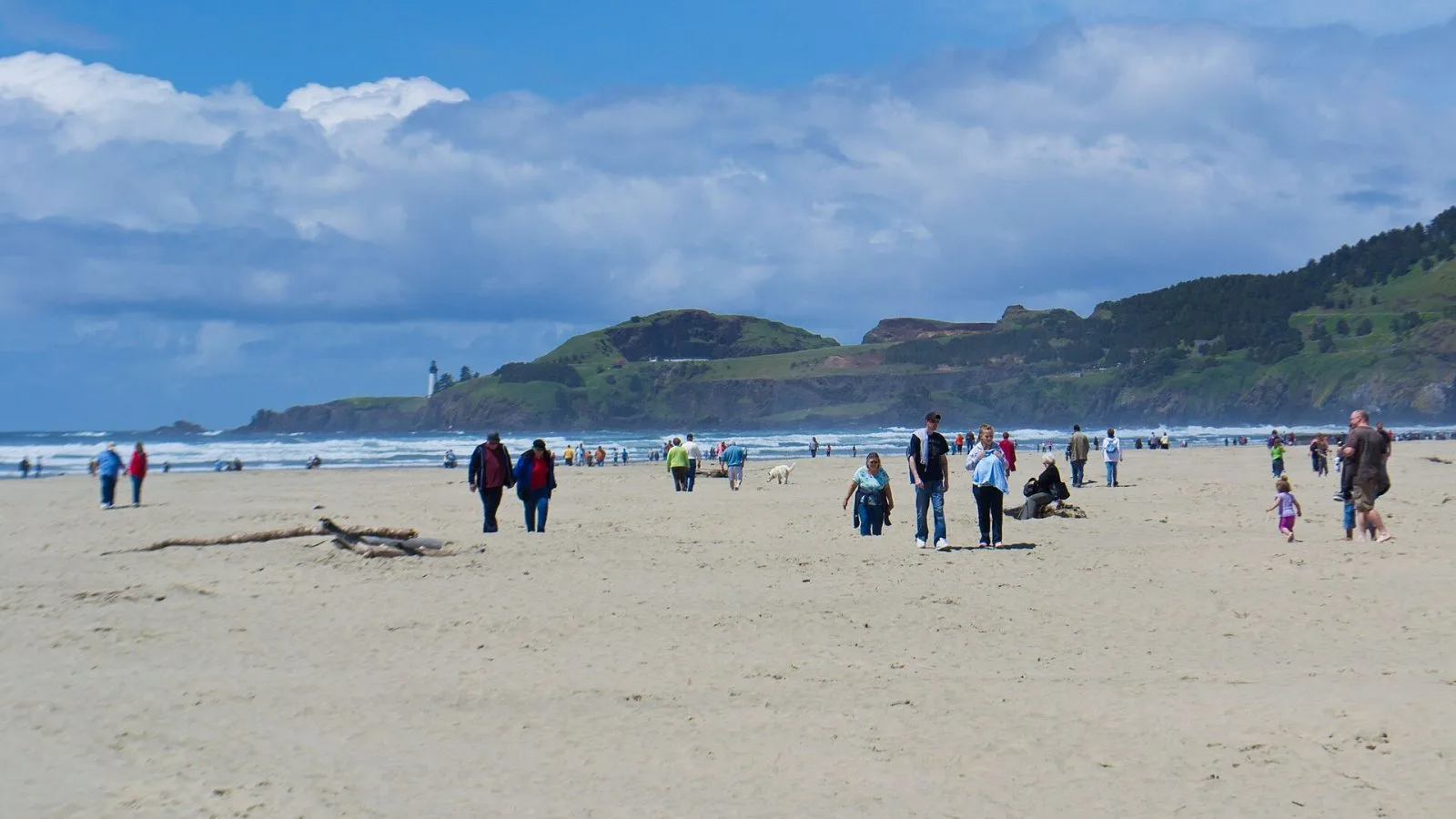
On June 5, 2012, a concrete-and-steel dock about 66 feet long came ashore at Agate Beach, just north of Newport. It had drifted across the Pacific from Misawa, a fishing port in northern Japan, after the March 11, 2011, earthquake and tsunami tore it and other floating docks loose. A metal placard on the dock helped Japanese officials confirm where it came from.
For a few weeks it was the most visited spot on the central coast. People drove from around the state to see it, touch it and take pictures. Scientists saw it differently. They were worried about what it had brought with it.
A floating island of life
The dock was covered in living organisms that had survived more than a year at sea, including mussels, barnacles, algae, sea stars and crabs. A team from the Oregon Department of Fish and Wildlife’s Marine Resources Program spent June 7 and 8 scraping more than two tons of plants and animals from its sides, top and parts of its interior, according to Oregon Parks and Recreation. State park crews buried the material under eight feet of sand, away from salt water.
Among the species removed were two known potential invaders, the northern Pacific sea star and a seaweed called wakame. Both are on a global list of the 100 worst invasive species. Scientists also found Japanese shore crabs. Researchers from Oregon State University’s Hatfield Marine Science Center helped identify the organisms. Crews then scorched the dock’s surfaces with propane torches to kill what remained, the Seattle Times reported.
The fear was simple. Species from Japan’s coast could establish themselves in Oregon’s estuaries and compete with native species, as other invasives have done elsewhere. No one had seen this many living organisms cross the Pacific on a single object.
Dismantled on the beach
The state considered towing the dock intact into Yaquina Bay and the Port of Newport, but ODFW biologists advised that bringing it into the bay posed a high risk of spreading invasive species. The port also said it lacked room for the structure and was unsure how much work it would take to make it usable.
The parks department took six bids and chose Ballard Diving and Salvage of Vancouver, Wash., to cut the dock apart on the beach and haul it away by land, at a cost of about $84,155. Officials said they could not be sure every organism had been removed from the bottom and hidden parts of the interior. A section was saved for a memorial.
A piece of the dock was later put on display near the Hatfield Marine Science Center as a memorial to the tsunami’s victims and a reminder of the Cascadia risk on Oregon’s own coast.
What scientists learned
The Misawa dock was one of four large docks that broke loose from that port. Another came ashore on the Washington coast later in 2012. Over the following years, scientists cataloged hundreds of Japanese species that arrived on tsunami debris, including boats, buoys and other docks.
The research showed that coastal species could survive years at sea on floating debris, and that plastic and other durable materials made long-distance rafting more likely than it had been with wood. NOAA tracked debris from the tsunami and coordinated with states on how to handle it.
A reminder close to home
The dock also brought home what a large tsunami can do. Oregon sits next to the Cascadia Subduction Zone, which scientists expect will eventually produce an earthquake and tsunami similar to Japan’s 2011 disaster. Agate Beach and much of the Newport waterfront are in the tsunami zone. The Marine Studies Building at Hatfield was designed with a rooftop refuge for that reason.
Rosalind Teague covers ocean science, coastal hazards and the people who shaped the central coast.