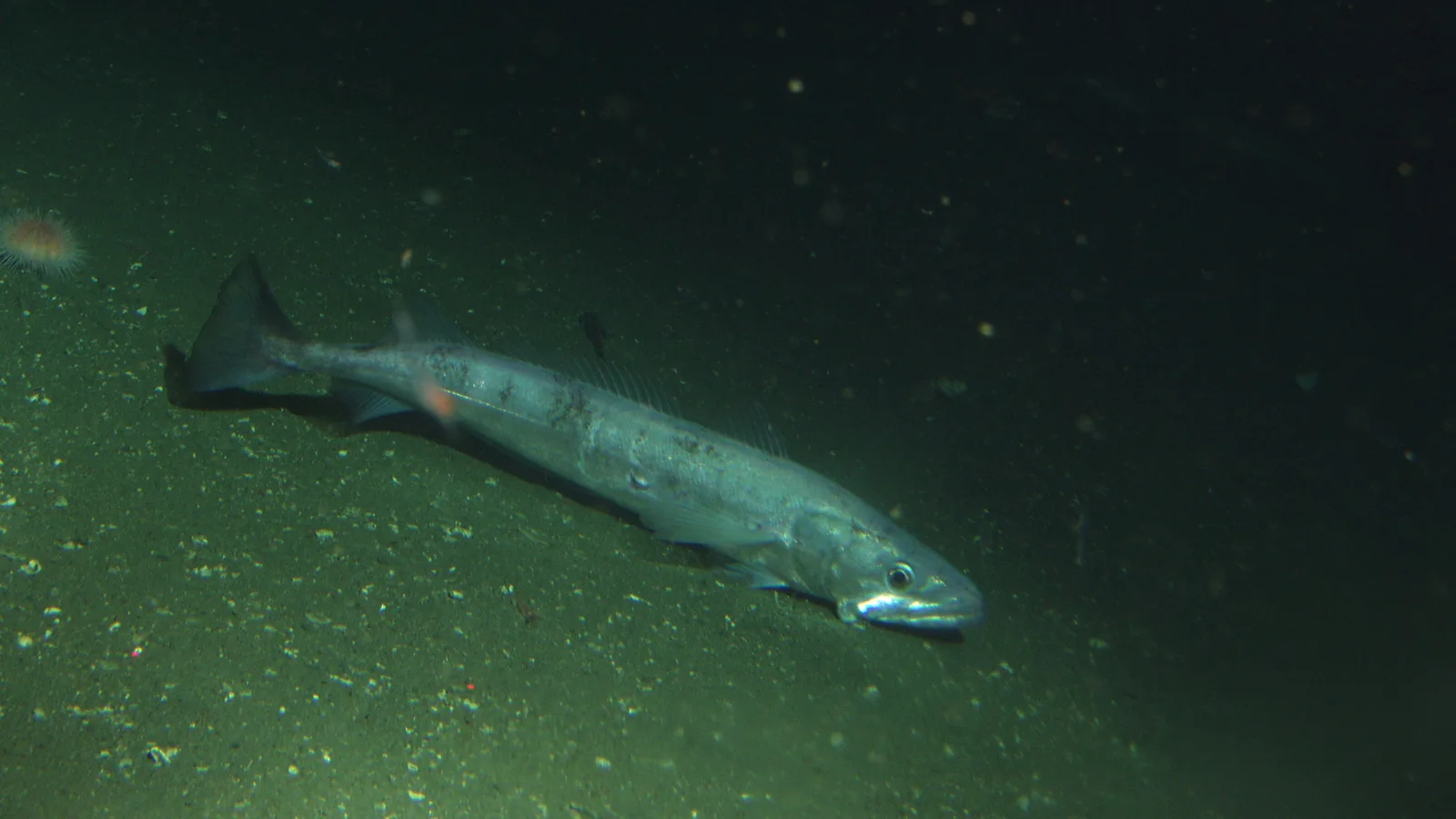
Photo: NOAA Photo Library / Wikimedia Commons, Public domain
Pacific whiting does not get the attention that Dungeness crab or salmon do, but by weight it is the largest fishery on the U.S. West Coast. Also called Pacific hake, it is a mild white fish, and much of it ends up as surimi, the minced fish paste used for imitation crab. More of it is now sold as fillets. Much of the catch is exported.
From foreign fleets to a domestic fishery
According to the Pacific Whiting Conservation Cooperative, the fishery began in the 1960s, when distant-water fleets from the Soviet Union and Eastern Europe fished whiting off the West Coast. In the 1980s it became a joint venture, with U.S. boats catching fish and delivering them to foreign processing ships offshore. By the 1990s it was fully domestic.
Today the U.S. fishery has three commercial sectors. Catcher-processors catch and process at sea, motherships process catch delivered by other boats at sea, and shoreside plants process fish trucked or landed at ports such as Newport. Under the Pacific Fishery Management Council’s groundfish plan, the non-tribal catch is split 34% to catcher-processors, 24% to motherships and 42% to shoreside plants. Coastal treaty tribes in Washington have a separate allocation.
Set by treaty
Whiting move between U.S. and Canadian waters as they migrate, so the two countries manage the stock together. Under a 2003 agreement, the Pacific Hake/Whiting Treaty, the U.S. gets 73.88% of the coastwide total allowable catch and Canada gets 26.12%, according to NOAA Fisheries. A joint technical committee completes a stock assessment each January. A scientific review group examines it, and a joint management committee recommends a catch limit to both governments by March.
The numbers are large. For 2025, after adjustments, the coastwide catch limit was 400,000 metric tons, and the U.S. share was about 295,500 metric tons, according to the federal rule published in June 2025.
Newport’s share
Oregon has long been the center of the shoreside sector. An ODFW sampling report found that in 2003 Oregon accounted for 72% of U.S. shoreside whiting landings, and Newport took in 40% of Oregon’s shoreside whiting, more than any other Oregon port. Whiting is also one of the main fisheries listed for Newport by the port and Oregon Sea Grant, along with Dungeness crab, pink shrimp, rockfish, sole, salmon and albacore.
The shoreside season usually runs from late spring into fall. Midwater trawlers tow large nets through schools of whiting and must deliver quickly, because whiting flesh softens fast. Plants on the Newport Bayfront run long shifts when the fish are coming in. Pacific Seafood, one of the main processors in Newport, reported in 2025 that it was diversifying hake production at its Oregon plant, adding more fillet and other products alongside surimi, according to Undercurrent News.
Why it matters
For Newport, whiting means summer work. Processing lines hire seasonal crews, and trawlers, trucking companies, ice suppliers and cold storage operators all benefit. Prices are low per pound compared with crab, but volume makes the fishery important to the port’s economy and keeps the plants busy between crab seasons.
The fishery has also invested in reducing bycatch, especially of salmon and rockfish, through observer coverage and cooperative agreements among fleets. Managers and scientists describe the stock as healthy and well managed, though catch limits can swing considerably depending on survey results and ocean conditions.
For more on how fishing and tourism share Newport’s waterfront, see our story on the Bayfront.
Marnie Holcomb is the editor and publisher of Oregon Coast Daily News and covers Lincoln County government and community life.