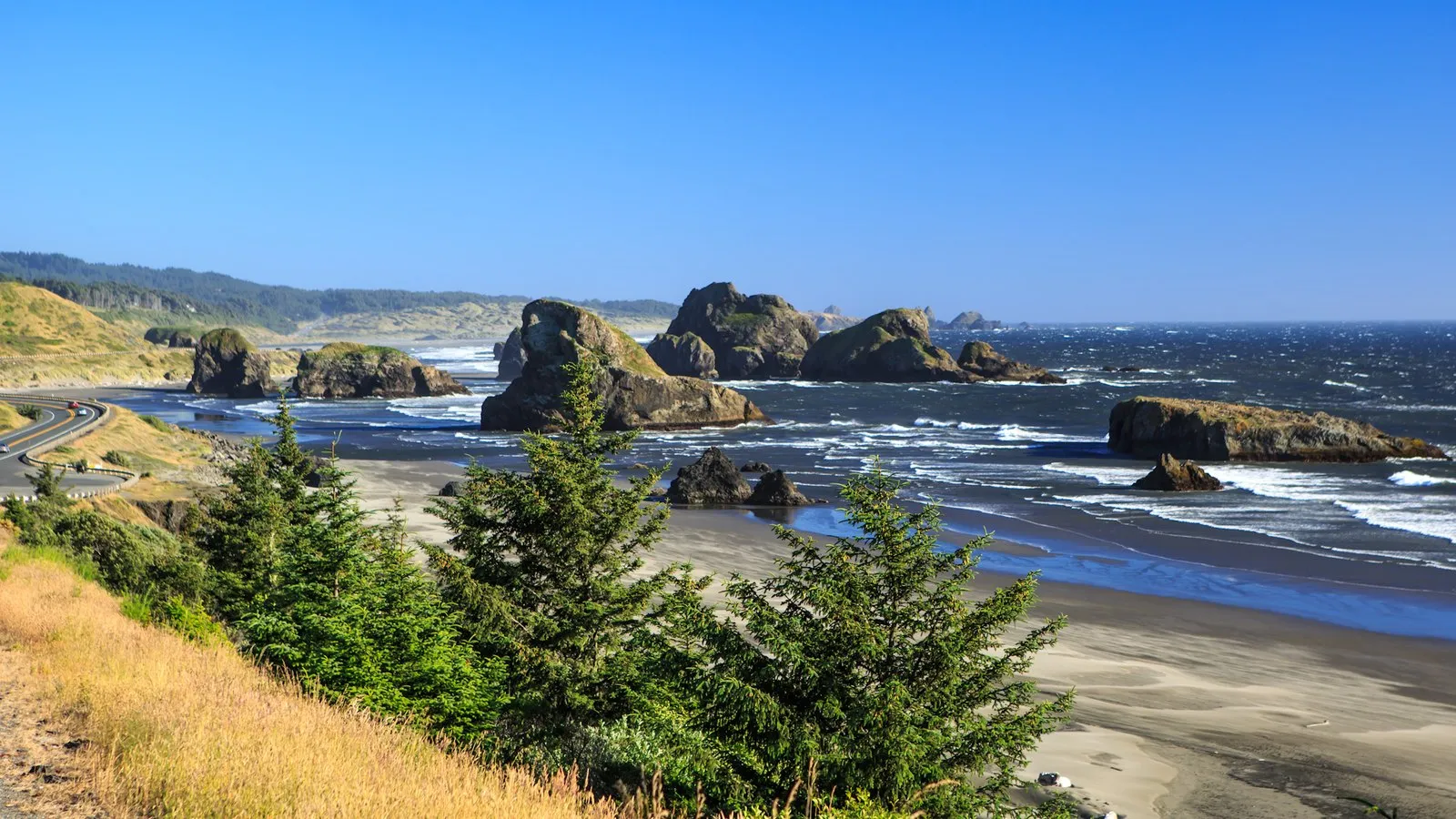
An Oregon coast beach. Oregon State Parks warns visitors about sneaker waves, logs in the surf, rips and crumbling cliffs. Photo: Murray Foubister, CC BY-SA 2.0, via Wikimedia Commons.
Winter is when a lot of people get to the beach between storms, and it is also when the water is least interested in a casual walk. Oregon State Parks tells visitors to treat a day on the coast like any other outdoor trip: watch the ocean, not just the view.
Sneaker waves are the first warning on the parks page. They are unpredictable, they are powerful, and they can knock an adult down. The advice is simple and easy to forget when you are facing inland for a photograph: keep one eye on the water. Logs are the second warning. Driftwood on the sand or in the surf can soak up water and gain tons of weight, the department says, and a wave can roll a log over a person. Stay off the logs, and stay away from them in the surf.
Cliffs and wet rocks are a third problem. Rocks can be slick, bluffs can be unstable, and chunks of cliff can fall without much warning, especially around overhangs and caves. State Parks says to stay on marked trails, not to climb fences or barriers, and not to walk along the base of cliffs or dig in the bluff. Incoming tides can also cut a person off on a pocket beach or in the tide pools; the department says to know the tide, especially in storms and at extreme highs and lows.
Rip currents are narrow, fast channels of water moving out to sea. If you are caught in one, the official advice is to stay calm, swim parallel to the shore until you are out of the current, then swim back to land at an angle. Beach campfires, when they are allowed, belong on open sand, away from driftwood and plants, and they should be put out with water, not sand. Seasonal fire restrictions can close that option altogether, so check before you burn.