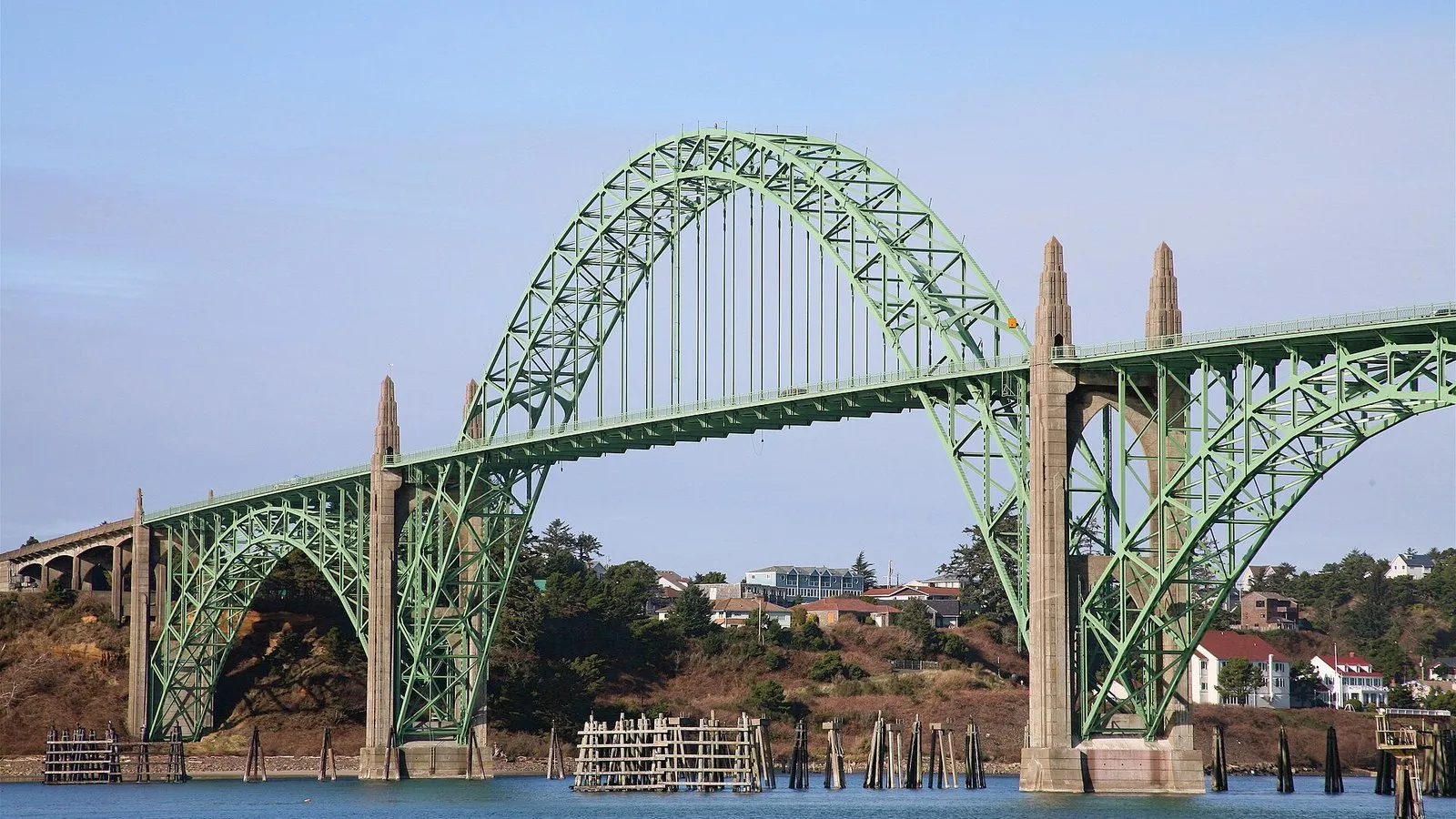
The Yaquina Bay Bridge on Highway 101 in Newport. Photo: User:Cacophony, CC BY 2.5, via Wikimedia Commons.
The money that keeps Highway 101 plowed, patched and open is starting to shrink. The Oregon Department of Transportation says the state’s motor fuels tax brought in 2.2% less in the first nine months of 2026 than in the same months of 2025, the first year-over-year drop its economists have long been forecasting.
ODOT announced the decline in a Nov. 6 bulletin, and coast outlets have been passing the warning along since. Florence’s KCST/KCFM led its Monday newscast with it, and KTVZ in Bend carried the agency’s figures on Friday.
Why the money is falling
The short answer is that Oregonians are buying less gas. Statewide consumption peaked in 2018 and has slipped every year since as drivers moved to more efficient cars, according to ODOT. The average car in Oregon now gets more than 25 miles per gallon, up from 21 mpg in 2016. More than 140,000 plug-in and fully electric vehicles are registered in the state.
This year the slide sped up. ODOT pointed to the nationwide jump in fuel prices since the war in Iran began this spring, which has pushed drivers to cut back.
For several years the decline in gallons was hidden by rate increases. The Legislature raised the state gas tax by 2 cents a gallon in 2020, 2022 and 2024, so total collections kept growing even as people bought less fuel. Those increases did not keep pace with inflation, the agency said, and there are no more on the books. The tax will stay at 40 cents a gallon unless lawmakers change it, and ODOT now believes gas tax revenue likely peaked in 2025.
“Reduced fuel consumption is worth celebrating because it means cleaner air for Oregonians,” ODOT deputy director Travis Brouwer said in the bulletin. “However, our transportation system still depends on gas tax revenue to function.”
What it means on the coast
Gas tax receipts make up a significant portion of the State Highway Fund, which pays for routine work like snow plowing, pothole repair and keeping roads open after storms. The money is also shared with counties and cities, so the squeeze reaches local road departments as well as ODOT. Brouwer said transportation agencies at every level “will now have fewer dollars to maintain and improve the transportation system,” and with inflation still running, each of those dollars will buy less.
That matters more here than in most places. US 101 is the coast’s main street and, for long stretches, its only through route. It carries freight to the ports, tourists to Newport and Lincoln City, and emergency traffic when slides or high water close other roads. The highway also crosses some of the state’s oldest and most expensive bridges to maintain, including the 1936 Yaquina Bay Bridge in Newport.
ODOT’s own warning is blunt. With less gas tax money for upkeep, the agency said, “travelers will experience rougher roads, more delays, more closures, and less reliable travel across the state.”
Coast residents have already had a taste of that this fall. Winter storm season is underway, and on Sunday high surf pushed driftwood logs into the pilings of Lincoln City’s Taft Dock in Siletz Bay, forcing the city to close it until crews can inspect the damage, the Lincoln Chronicle reported. That dock is a city facility, but the same kind of storm wear lands on state roads and bridges every winter.
What comes next
The fix, if there is one, is up to the Legislature. ODOT has been pointing lawmakers and the public to its transportation funding page, which lays out how the state pays for roads and the options for putting state and local agencies on steadier footing as fuel use keeps falling. Those options include per-mile road charges, which Oregon has been testing for years through its voluntary OReGO program.
Locally, cities are also looking at how people get around. Florence is surveying residents about a proposed mobility hub where bus routes and other transportation services would connect, according to KCST. The survey is linked in the city’s November newsletter at ci.florence.or.us.
For now, the 2.2% drop is modest. The concern at ODOT is the direction: fewer gallons each year, a flat tax rate and costs that keep climbing.
Silas Kerrigan covers business, the tourism economy and household finance in Lincoln County.