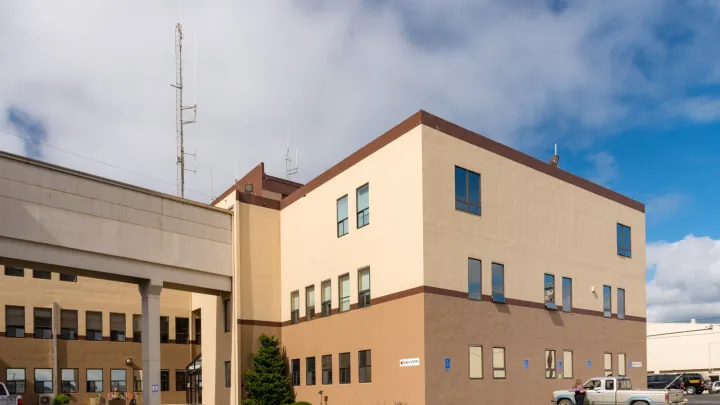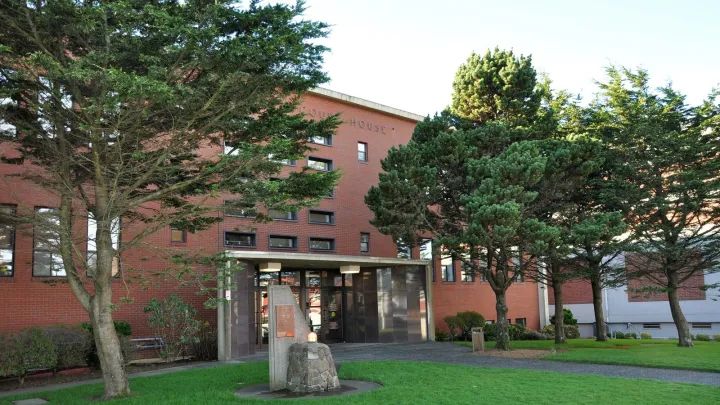
Photo: Gary Halvorson, Oregon State Archives / Wikimedia Commons, CC BY 4.0
The Newport City Council is the body that sets city policy, adopts the budget, approves ordinances and hires the city manager, who runs day-to-day operations. Nearly everything it does happens in public meetings, and the city’s rules give residents several ways to weigh in, in person, online or in writing.
When and where the council meets
The council meets on the first and third Mondays of each month in the Council Chambers at Newport City Hall, 169 SW Coast Highway. The city lists two parts to a typical meeting day: a work session earlier in the day and the regular session at 6 p.m. City pages have listed the work session at noon and, on another page, at 4 p.m., so check the posted agenda for the exact start time. When a meeting Monday lands on a holiday, the meeting usually moves to Tuesday.
Work sessions are where councilors hear staff briefings and talk through issues before they come up for a vote. Formal action, such as passing an ordinance or approving a contract, generally takes place at the regular session. The council also calls special and, occasionally, emergency meetings; in 2025 the city posted a special meeting agenda on Nov. 12 and an emergency session on Oct. 27, in addition to the regular schedule.
Notices for all city meetings are posted on bulletin boards at City Hall, the Newport Public Library at 35 NW Nye St. and the Newport Recreation Center at 225 SE Avery St., as well as online.
Watching from home
Meetings are live-streamed on the city website and broadcast on Charter Channel 190, according to the city. Recordings, audio and minutes are archived online, along with agenda packets that include staff reports and supporting documents. Those packets are often the most useful thing for a resident to read: they show what staff is recommending and why, usually several days before a vote.
The city has said its old email notification system for agendas is no longer in service, so people who want to follow a particular issue need to check the agenda page directly.
How public comment works
Regular council sessions include two public comment periods, according to the city’s public comment procedures. One is for items on the agenda. The other is open to any topic, including subjects the council is not scheduled to discuss. Other city committees have a single comment period.
Speakers get three minutes, without interruption, though an agenda can limit comment to two minutes per person when a large turnout is expected. The council does not debate with speakers during public comment, and remarks are directed to the council as a whole rather than to individual members. If several people from the same group want to make the same point, the city asks them to choose one speaker. Comments are expected to stay civil and on topic, and disruptive behavior can lead to removal.
To speak in person, arrive early, fill out a comment card and hand it to the city recorder before the meeting starts. To speak remotely, you must ask at least 24 hours in advance to receive connection instructions.
Written testimony
Written comments are another option and become part of the meeting record. The city’s procedures say comments for council meetings should be emailed to the city recorder by noon on the day of the meeting, and at least four hours before committee meetings. A separate city notice lists publiccomment@newportoregon.gov as an address for written comment. If you are unsure, call the city recorder’s office before the deadline.
Accessibility
Council chambers are accessible, and the city asks that requests for an interpreter or other accommodations be made at least 48 hours ahead through the city recorder’s office. City Hall’s main line is 541-574-0603. City Hall is open Monday through Thursday, 8 a.m. to 6 p.m., and closed Fridays.
Beyond the council
Much of the detailed work happens in advisory bodies, including the Planning Commission, the Budget Committee, and the Parks and Recreation and Bicycle and Pedestrian committees. They usually meet once or twice a month, and their agendas, minutes and recordings are posted the same way. Land-use decisions in particular often start at the Planning Commission, so residents following a development proposal should watch that agenda as closely as the council’s.
State law also gives the public a way to file a grievance if they believe a city body has violated Oregon’s Public Meetings Law. Newport accepts those in writing at the city manager’s office, attention: city recorder.
Many services that residents deal with, such as property taxes, the sheriff’s office and county roads, are run by the county rather than the city. For that side of local government, see our guide to how Lincoln County government works.