Photo: Associated Students of the California Institute of Technology (ASCIT) / Wikimedia Commons, Public domain
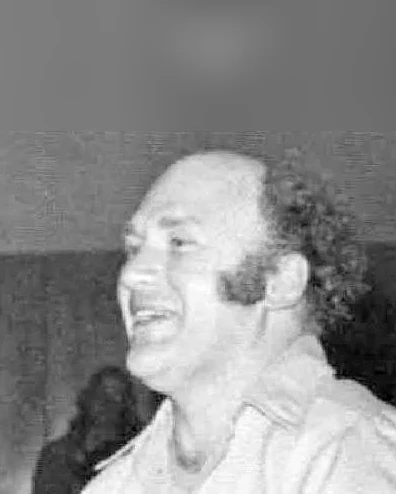
Ken Kesey’s first novel, “One Flew Over the Cuckoo’s Nest,” made him famous in 1962. His second, “Sometimes a Great Notion,” published in 1964, is the one Oregonians tend to claim as their own. It is a long, dense book about a logging family on a coastal river who refuse to honor a strike, and in 1970 Hollywood came to Lincoln County to film it.
The novel
The book is set in Wakonda, a fictional town on the Oregon coast. The Stamper family, led by the stubborn old Henry and his son Hank, run an independent logging outfit and keep cutting and delivering logs while the local union strikes against a big lumber company. The town turns on them. Hank’s college-educated half-brother, Lee, comes home from the East with his own reasons for being there. The family motto, painted on a sign in the story, is “Never Give a Inch.” Kesey, who grew up in the Willamette Valley, drew on the rain, rivers and gyppo logging towns of the Coast Range, and the book is known for shifting points of view and for how thoroughly it captures the weather.
The shoot
Universal Pictures filmed the movie in western Oregon in the summer of 1970. Paul Newman starred as Hank, with Henry Fonda as Henry, Lee Remick as Hank’s wife, Viv, and Michael Sarrazin as Lee. Richard Jaeckel played cousin Joe Ben.
Wakonda was stitched together from locations around Lincoln County, including Kernville and other spots along the Siletz River, Yaquina Bay, the Yaquina River and Newport. Production did not go smoothly. Director Richard A. Colla left about five weeks into filming, citing artistic differences and a needed throat operation. Around the same time, Newman broke his ankle, and production shut down on July 29. When filming resumed two weeks later, Newman was directing as well as starring.
The cast spent that summer mixing with the locals, a period Oregon writer Matt Love documented in a 2012 book, The Oregonian reported. Mo Niemi, of Mo’s chowder house, befriended the cast and crew, and local accounts say she appeared in a scene filmed at the Bay Haven Inn, which stood in for the film’s bar, The Snag. Local people worked as extras.
The film
“Sometimes a Great Notion” was released in December 1971. It drew good reviews; Roger Ebert called Newman “a director of sympathy and a sort of lyrical restraint.” Jaeckel was nominated for an Academy Award for best supporting actor, and the theme song, “All His Children,” sung by Charley Pride with music by Henry Mancini, was nominated for best song. The film later had an odd place in television history. It was the first movie shown by HBO when the pay network launched in 1972. When it aired on commercial TV in 1977, it was retitled “Never Give a Inch.”
The Stamper house
The film’s most lasting landmark is the Stamper house, built by Universal on the bank of the Siletz River near Kernville. In the story the house stands defiantly on a riverbank being eaten away by the current. After filming, the house was completed as a real home and still stands, privately owned, according to Oregon Coast Magazine. It has been used as a vacation rental. It is on private property, so look from the road or the river and respect the owners’ privacy.
Why it still matters
The book and the film are a record of Lincoln County at a turning point. When Kesey wrote the novel, logging and mills were still at the center of the economy in towns like Toledo and Siletz. Within a few decades, mill closures, changes in forest policy and the growth of tourism had changed that. The film preserves the river, the bay and the waterfront as they looked in 1970, and the region has periodically celebrated its connection to it, including anniversary events covered by Oregon Coast Beach Connection. For readers, the novel remains one of the best portraits of the Oregon coast’s working-class past.
Rosalind Teague covers ocean science, coastal hazards and the people who shaped the central coast.