Photo: National Oceanic and Atmospheric Administration / Wikimedia Commons, Public domain
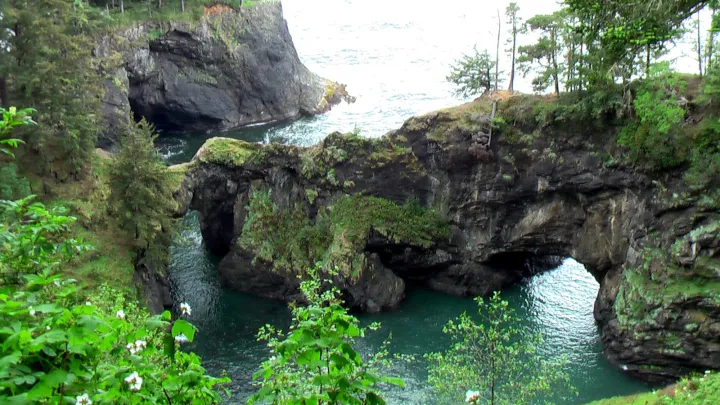
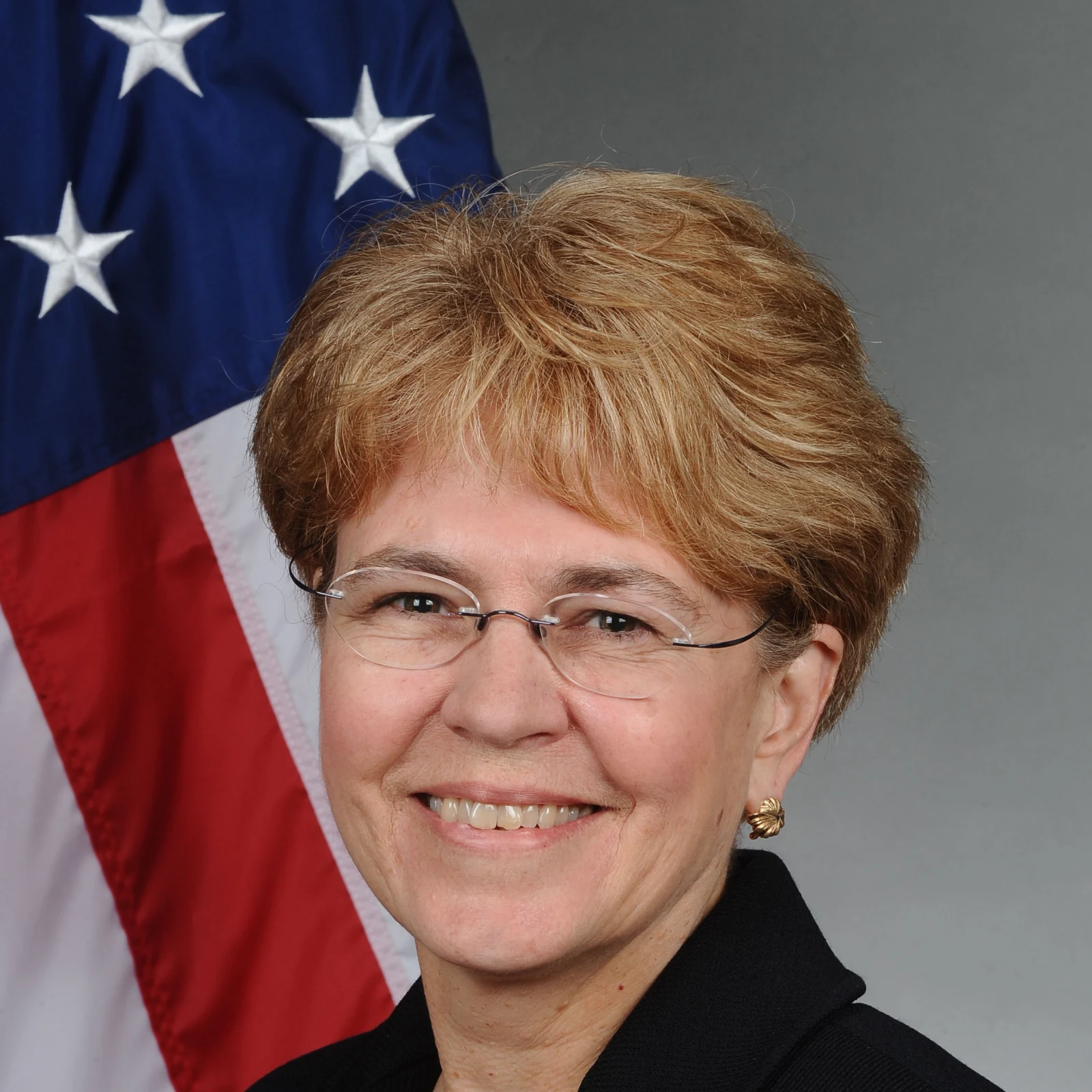
For decades, the tide pools and rocky benches of the central Oregon coast have doubled as outdoor laboratories. Some of the best-known work done in them came from Jane Lubchenco and her husband and research partner, Bruce Menge, of Oregon State University. Lubchenco went on to lead the National Oceanic and Atmospheric Administration, the federal agency with one of its largest bases in Newport, and later served in the White House.
From Denver to the shore
Lubchenco was born in 1947 in Denver, the eldest of six daughters of two physicians, according to a biography prepared for OSU Libraries’ oral history collection. She studied biology at Colorado College and spent a summer at Woods Hole, Massachusetts, where she first did hands-on marine research. In 1969 she started graduate school at the University of Washington, where she met Menge. She finished a master’s thesis on sea stars and then a doctorate at Harvard in 1975, studying how snails and seaweeds interact on New England’s rocky shores. She joined the Harvard faculty, and she and Menge extended their work to tropical shores in Panama.
Coming to Oregon
In 1977 the couple moved to Oregon State University, which agreed to an unusual arrangement: they split one full-time faculty position in the zoology department. That let them raise two children while staying on the tenure track. They spent the following decades on the Oregon coast, running long-term experiments on how predators, grazers, waves and ocean conditions shape life between the tides.
Their research showed that Oregon’s rocky shore ecology differs from that of Washington and California, and tied what happens in tide pools to the nearshore ocean, including upwelling, the seasonal rise of cold, nutrient-rich water that feeds the coastal food web. The work expanded to include genetics, biomechanics and physical oceanography. In 1999 they helped found the Partnership for Interdisciplinary Studies of Coastal Oceans, or PISCO, which runs coordinated studies at sites along hundreds of miles of the West Coast. Lubchenco led it for about a decade. Central coast sites such as those near Yachats and Depoe Bay are part of that long record, which has since helped document the low-oxygen “dead zones” that have appeared off Oregon in some summers.
Science and policy
Lubchenco’s move toward public policy began in the late 1980s as vice president of the Ecological Society of America, when she led an effort to set research priorities for the field. Increasingly concerned about the state of the oceans, she founded the Leopold Leadership Program in 1998 and the Communication Partnership for Science and the Sea in 1999, both aimed at training scientists to explain their work to the public and policymakers. She was awarded a MacArthur Fellowship, served as president of the American Association for the Advancement of Science, and is a member of the National Academy of Sciences and the Royal Society of London.
Leading NOAA
In 2009 she was confirmed as NOAA administrator, the first woman and first marine biologist to hold the job. During her four years, the OSU biography notes, the agency’s budget grew substantially, and it responded to the Deepwater Horizon oil spill in the Gulf of Mexico in 2010. NOAA also adopted new policies on coastal management and fisheries, including a push toward catch-share programs, and planned the next generation of weather satellites. That period overlapped with NOAA moving its Pacific fleet base to Newport, which opened in 2011.
She left NOAA in 2013 and returned to OSU. In 2021 she joined the White House Office of Science and Technology Policy as deputy director for climate and environment, a role she held through early 2025, according to her published biography. She has remained affiliated with OSU.
Why it matters here
Lubchenco’s career touches the central coast at several points: the field sites along Lincoln County’s shore, the OSU marine research community in Newport, and federal fisheries and ocean policy that shape what the local fleet can catch. Her emphasis on getting scientists to talk directly to the public also shows up locally, in the public talks and outreach that OSU and NOAA researchers in Newport routinely give.
Dewey Albrecht covers the Port of Newport, commercial and sport fishing and the Yaquina Bay bar.